By: Kaden Vail
Electronics and technology are an essential part of everyday life from small appliances like toasters, coffee pots, and cellphones to large industrial appliances like smart refrigerators and flat screen TVs. What used to be a small and homogenized industry, selling large box televisions and clunky computers, has now flourished into a diverse market filled with thousands of unique electronic products.
In 2024, electronics manufacturing contributed $900 billion to the US GDP, with a total of $1.8 trillion in total economic output in the US alone. Despite the increasing production of electronics, there exists virtually no US federal legislation to address mounting levels of electronic waste generated by consumers.
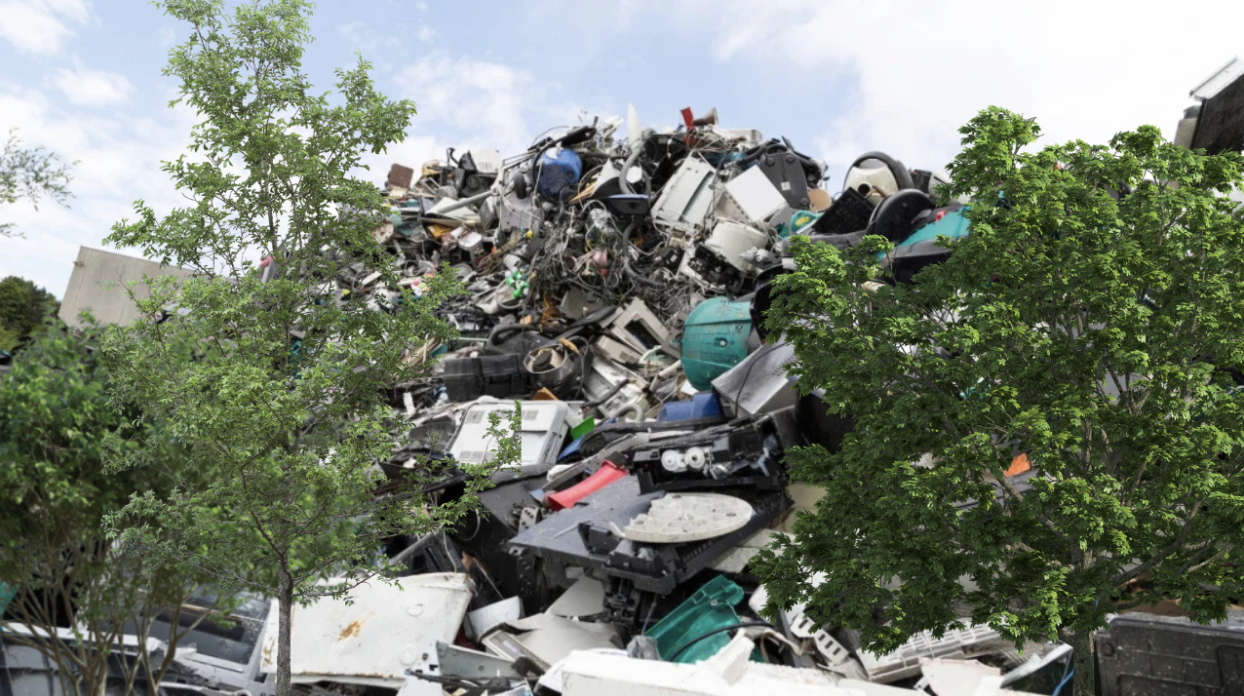
Electronic waste is defined as unwanted electronic devices that are discarded from sources including households, corporate industries and government facilities. Global e-waste production hit a record breaking $62 million with nearly one-sixth of this waste attributable to the United States.
Currently, 25 states and the District of Columbia have mandatory regulations pertaining to the proper disposal of e-waste. Scientists and advocates argue the lack of comprehensive federal regulation promotes a fragmented and inefficient waste collection system.
Without a universal and standardized framework, monitoring and disposing of this e-waste presents difficulties.
In the absence of targeted legislation, the only reference many businesses have to guide their electronic waste disposal is the Resource Conservation and Recovery Act. Instituted in 1976, RCRA gives the EPA the power to regulate and handle hazardous industrial waste by aiding businesses in the classification, storage and tracking of their waste.
However, RCRA does little to mandate proper e-waste disposal for individual consumers and small businesses. With little consumer education, varying state requirements and incomplete federal legislation, proper disposal and recycling rates for these groups have become staggeringly low.
An EPA report on durable and electronic goods shows the inefficiency of the current system by presenting recycling statistics for varying types of e-waste. The report finds that of the 2.2 million tons of small appliance waste that was generated in 2018, roughly 6% was properly recycled while nearly 80% was sent to landfills. Additionally, of the 2.7 million tons of larger electronic waste—including TVs, computer equipment and other larger electronic products— only 39% was properly recycled, with no additional data available regarding landfill disposal rates.
Problems with proper e-waste disposal go beyond the volume of waste generated. The most prevalent issues associated with rampant waste production are the hazardous chemicals contained within the discarded products and the environmental degradation associated with chemical leaching.
When e-waste is disposed of without proper care, toxins can leach into soil and groundwater systems which poses significant threats to the health of nearby plants, animals and surrounding communities. Studies suggest that improper disposal of e-waste in landfills can lead to high levels of human exposure to several toxic chemicals including lead, mercury and cadmium. Long-term exposure to lead and mercury is linked to cognitive decline and cardiovascular disease, while cadmium can impair children’s cognitive development and harm kidney function.
Without proper legislation, the risk of exposure to harmful toxins within e-waste is significantly higher. This unfortunate reality is further compounded by the lack of landfill data available to states and the federal government due to the absence of federal regulations.
Fortunately, leading states like California can offer guidance for the federal government so that they may create more comprehensive and universalized legislation pertaining to proper disposal protocols. The Electronic Waste Recycling Act of 2003 was instituted in California in order to create funding, collection and recycling programs for “covered electronic waste,” which can be defined as specific types of electronic products listed in the Act.
This Act establishes manufacturer responsibilities to reduce hazardous materials within electronic products, grants the Department of Toxic Substances Control authority to develop proper recycling infrastructure and requires fees on electronics retail sales to supplement recycling collection costs.
Just two years after the Act’s implementation, the program collected and recycled 64 million pounds of waste with a total collection rate of 2.7 billion pounds. The success of EWRA in collecting waste and data for the California government demonstrates e-waste legislation’s potential effectiveness and cost efficient qualities.
With 25 states still lacking state-level electronic waste legislation, the need to address significant gaps in e-waste management has never been greater. The federal government must institute mandatory regulations that establish clear and safe disposal protocols as well as comprehensive data collection systems to curb this intensifying issue.
With the proper implementation of federal e-waste legislation, the US will flip the switch on a flourishing recycling sector and power down exposure risks in Georgia and beyond.