By: Leehee
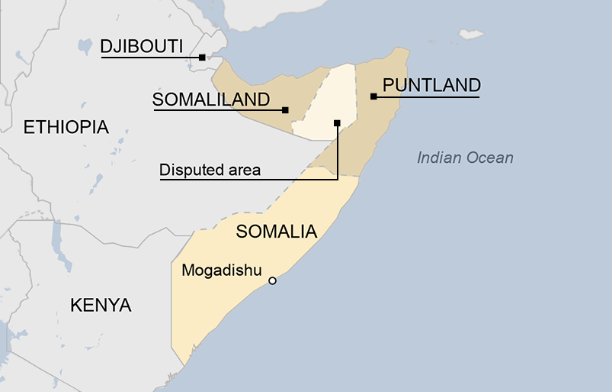
For over thirty years, Somaliland has allowed its people peaceful, democratic governance, a reality that is very different from the violence-ravaged Horn of Africa. On December 26, 2025, Somaliland received its first recognition of statehood when Israel became the first U.N. member to recognize the Republic of Somaliland as an independent, sovereign state. This historic moment highlighted Washington, which signaled it would consider similar recognition but has yet to make any official remarks on whether it would formally recognize the breakaway region in the Horn of Africa. Somalia, the recognized authority of this region, has faced prolonged instability due to weak governance and internal conflict. Somaliland broke away from Somalia in 1991 and has since maintained stability and democratic elections. The lack of recognition of Somaliland reveals a fundamental contradiction in African state-building: the commitment to territorial integrity—led by the African Union—prioritizes preserving borders over recognizing effective governance, exposing sovereignty as a political construct rather than a reflection of state capacity.
Somaliland and Somalia emerged from separate British and Italian colonial administrations. On June 26, 1960, Somaliland gained its independence from the British and existed as an independent sovereign state for five days until it voluntarily chose to unite with northern Somalia to create one Somali nation. However, this union was not the peaceful merger both sides had hoped for. Power quickly centralized in the south, and after a government coup in 1969, Somalia was ruled by different insurgent groups and dictators who carried out violent repression, including bombing Somaliland’s capital, Hargeisa, and committing genocide against the Isaaq tribe, which makes up most of Somaliland’s population. In 1991, the Somali government officially collapsed, and the Somali National Movement, which led Somaliland, refused to accept an interim government dominated by southern factions and declared independence from Somalia.
Since declaring independence in 1991, Somaliland has passed a constitution and transitioned from a power-sharing agreement across leading clans to a democracy. Somaliland holds free and fair elections, has its own currency and security forces, and issues its own passports, meeting the requirements of a democratic, sovereign state. This legitimacy has contributed to internal stability and resistance to outside extremist influence. Somaliland has grown its economy by selling access to strategic port locations and through innovations in telecommunications. The relative stability has attracted foreign investors like the UAE, Ethiopia, and the UK. Somaliland is more functional than many recognized countries in the African Union, yet Somaliland’s exclusion from recognition reinforces that sovereignty is not awarded based on governance performance.
The main reason the African Union and most other states cite for not recognizing Somaliland is their commitment to the 1964 Cairo Convention, which committed members of the AU to preserving colonial-era borders. Much of the backlash argues that Israel is infringing on Somalia’s sovereignty. The African Union fears that recognizing Somaliland could lead regions like Biafra and Western Sahara to also claim independence and fragment existing states. The African Union also cites the two cases since 1964 where independence has been granted—Eritrea and South Sudan—both of which experienced instability post-independence. So even though Somaliland was described as “unique and self-justified” by the African Union in 2005, the Union would still rather prioritize systemic stability over recognizing exceptional cases that meet the criteria of statehood.
So why does Somaliland’s independence status lead to such global outcry? Somaliland occupies a strategic position along the Gulf of Aden, across from Yemen and the Berbera port, which provides access to the Red Sea connecting Europe, the Middle East, and Africa. This is where 15% of maritime trade and 30% of global container traffic typically passes, valued at over 1 trillion dollars. This has made Somaliland the center of the Egypt–Ethiopia rivalry and the U.S.–China competition. Somaliland is especially strategically important to the United States because of its proximity to Somalia, where Al-Shabaab operates to target U.S. assets in the region. Despite numerous international peace efforts to stabilize the region, Somalia remains fragmented.
At its core, the Somaliland case reveals that African sovereignty is defined by colonial borders and norms of territorial integrity rather than governance outcomes. This system, designed to prevent conflict and stabilize post-colonial borders, has instead sustained fragile states while limiting more functional ones. The assumption that ethnic homogeneity is the most important aspect in stability is flawed. Somaliland undermines the belief that instability in Africa is primarily the result of arbitrary colonial borders. Even relatively homogeneous societies like Somalia and Somaliland, which share a common Somali ethnicity, can still experience conflict. Somaliland makes the case that stability comes from local legitimacy, strong institutions, and political inclusion. The result is a perverse incentive structure in which recognition is granted based on precedent rather than performance, rewarding fragile states while constraining successful but unrecognized ones.
Somaliland is more than a diplomatic anomaly—it is a test of how sovereignty is defined and applied in Africa. For decades, the international system has recognized Somalia as a unified state while ignoring the political reality on the ground. Somaliland has built the institutions associated with statehood yet remains unrecognized. As debates over recognition intensify, the question is no longer just whether Somaliland should be recognized, but whether African sovereignty can evolve to reflect political reality rather than remain bound to the colonial past.