By: Ciara Whimbush
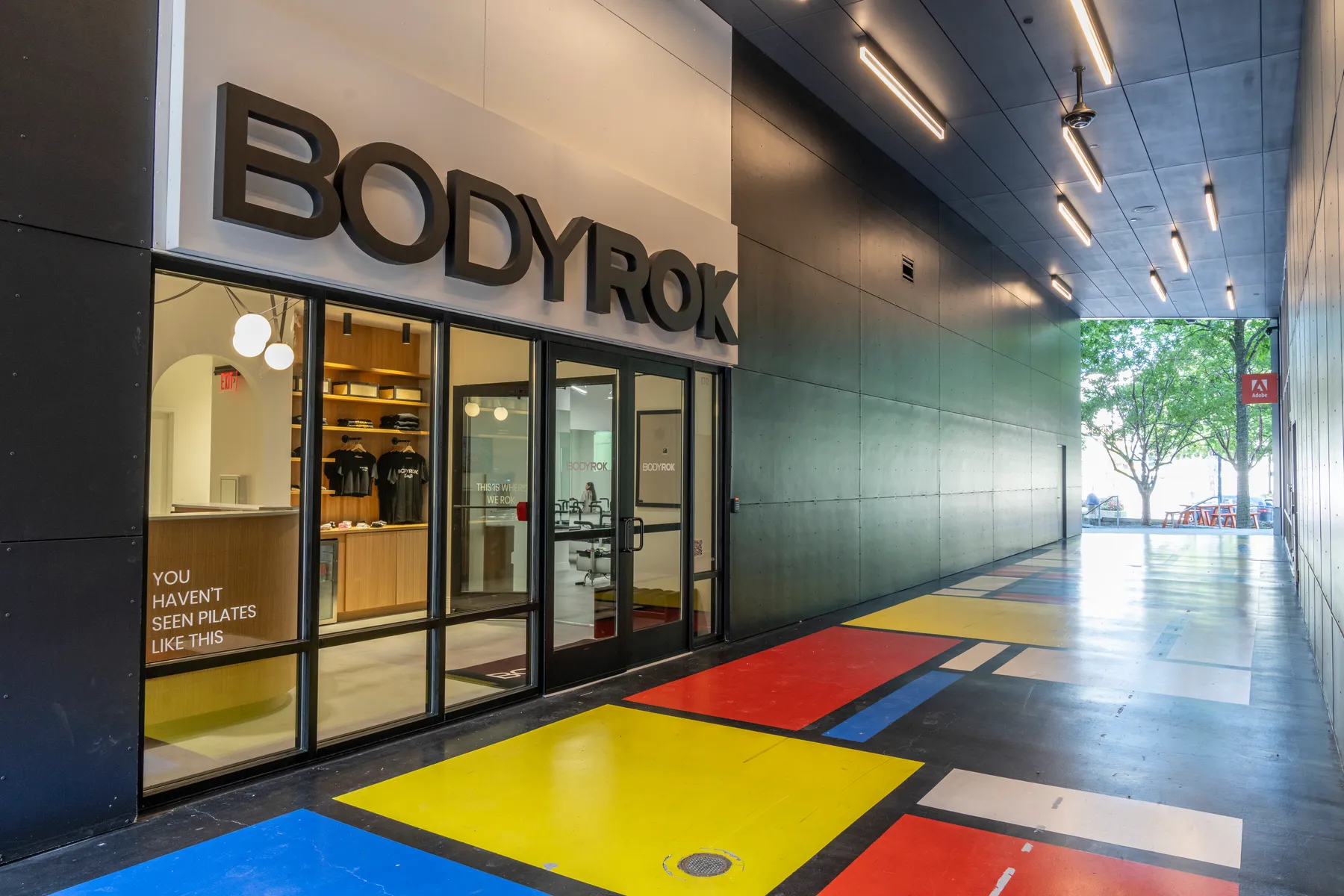
For any young person with access to a cell phone, it’s strikingly easy to come across several videos featuring pilates classes on one’s feed. Know the scene — two-piece Lululemon workout sets, Bala weights, and an aux that sounds fresh out of a DJ set by Diplo. Whether it be the frequency or the aesthetic, a pilates craze has swept the Internet. Despite the exercise method tracing back to the 1910s, the mid-2020s have seen a drastic uptake in participation, with the workout method being the “most-booked workout globally in 2024,” according to ClassPass. It might not have been in founder Joseph Pilates’ wildest dreams to have pilates look like what it is today — the exercise was invented in order to rehabilitate the sick and injured soldiers of World War One; however, it is safe to say that his foundation has given birth to thousands of fitness aficionados. With several health benefits and a strong community at its helm, pilates’ resurgence represents a bright future for what fitness could look like. However, due to geographic barriers for disenfranchised communities, many people might not ever get to experience the positives of a pilates workout.
Pilates is also a proven form of preventative fitness, a term used to characterize exercise that aims to prevent injury by combating potential health issues before they arise. This type of fitness has been shown to toughen up one’s immune system, manage weight, and decrease the risks of chronic illnesses like diabetes. With so many health benefits such as increased mobility and flexibility, one could assume that the location of these classes would be in areas where preventative exercise is needed most – low-income ones. The U.S. The Department of Health and Human Services asserts that, among lower income individuals, health issues such as hypertension, arthritis, diabetes, and cancer are pertinent. One could assume that due to the ability of pilates and other methods of preventative exercise to help offset or eradicate ailments, that these studios would be more available to lower-income communities who need it most. However, upon analyzing where these studios arise, that ideal could not be further from reality.
When a Georgia resident visits The Daily Pilates online, pilates studios in the metropolitan-Atlanta area will appear in areas such as Milton or Imann Park, to name a few. This is commonplace for the location of studios in the state of Georgia; whether in core Atlanta cities like the aforementioned Buckhead or some surrounding suburbs like Decatur or Sandy Springs, areas that possess higher income levels usually also own a fair number of pilates studios. Cities where the median income resides between $77,600 to $138,000 a year own dense populations of preventative fitness options, likely due to increased foot traffic and rent costs to own buildings. However, when one looks at areas in Georgia with median incomes under $55,000, there are no pilates studios around. Some non-Atlanta cities are exempt from this statement; although the median income in Athens is $52,974, a handful of studios exist within the city, especially close to UGA. This same principle follows in other mid-sized cities like Valdosta. However, in other areas like Jasper, where the median income sits at $52,442, studios are rendered nonexistent.
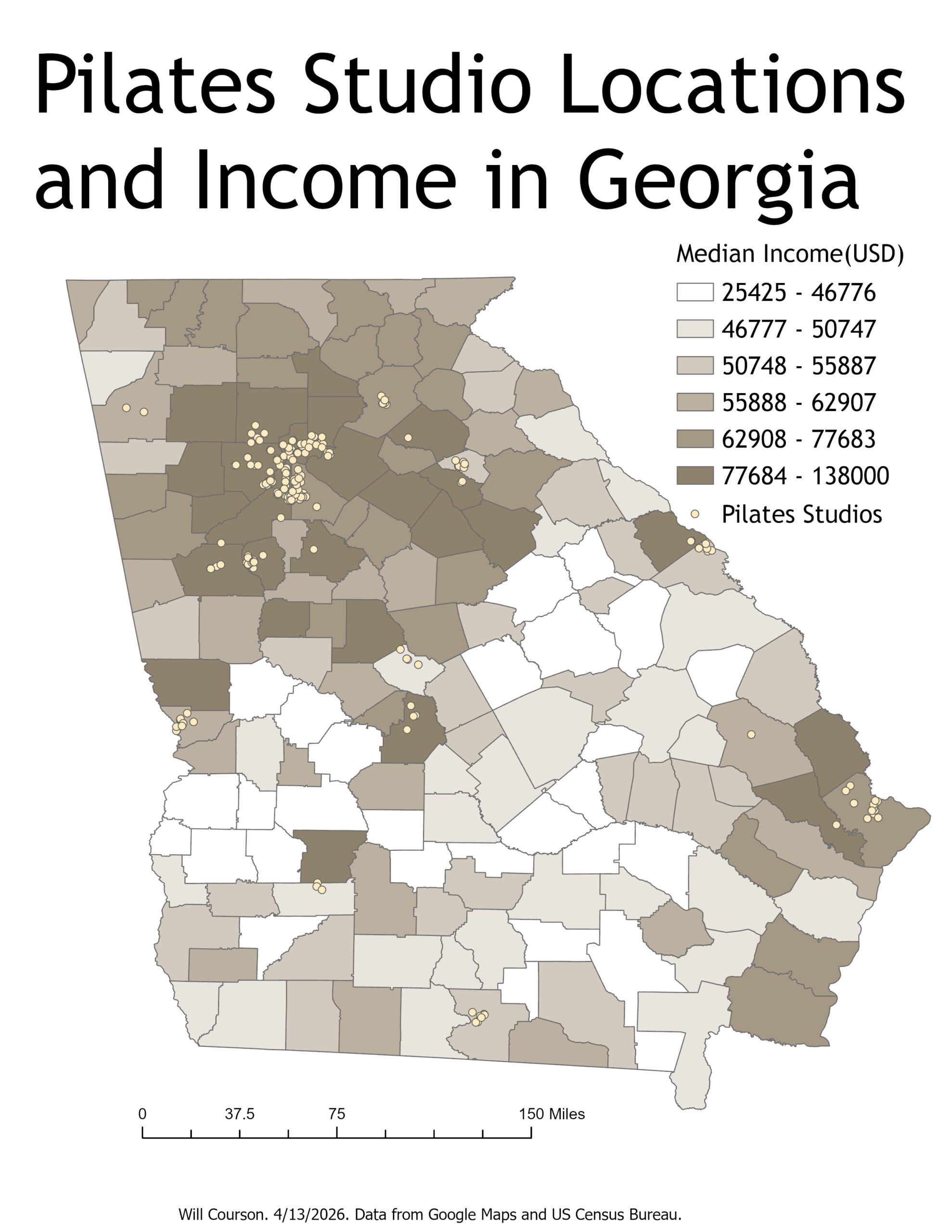
The placement of these classes has much to do with the pricing associated with a pilates class. Studios in major cities also price a little higher to account for the rent in a densely populated area. With other compounding factors like equipment costs or instructor costs, the cost of a membership can be around $160-$320. For potential participants in the activity, there additionally lie the costs of driving to and from classes; for example, if an individual in Greensville, Georgia, where the median income resides at around $49,000, wanted to attend a pilates class in Atlanta’s Club Pilates, they would travel nearly ninety minutes and 76 miles one way to go to class. To some, these may not stand as too dicey, but with costs on necessities increasing near-exponentially, paying money for a pilates class and additional costs of transportation does not appear realistic for the average person.
There are ways to curb the geographical gap in pilates, though. Several popular influencers online have crafted at-home workouts for any and all audiences, regardless of economic status. Creators such as Move with Nicole, Jessica Valant Pilates, and Pilates with Izzy have made hundreds of videos for people to do at home, with thorough instructions to assist beginners. To handle the cost of equipment different forms of pilates may require, stores like Five Below have begun to sell “dupes” of handheld weights, mats, and pilates blocks to make the activity accessible. Some forms of pilates — like the foundational mat variation, for example — require no equipment whatsoever. This allows for patrons to only need a device and a flat floor to conduct their exercise upon.
Although alternatives are in place that can mend the geographical imbalance that pilates locations create, it still does not remain fair to a significant amount of individuals who will have to sacrifice either their time or money to receive access to preventative exercise. All persons, regardless of their income, should have access to the same enhanced exercise classes; if health issues do not discriminate, there’s no reason why preventative health access should.