By: Julia Hartman
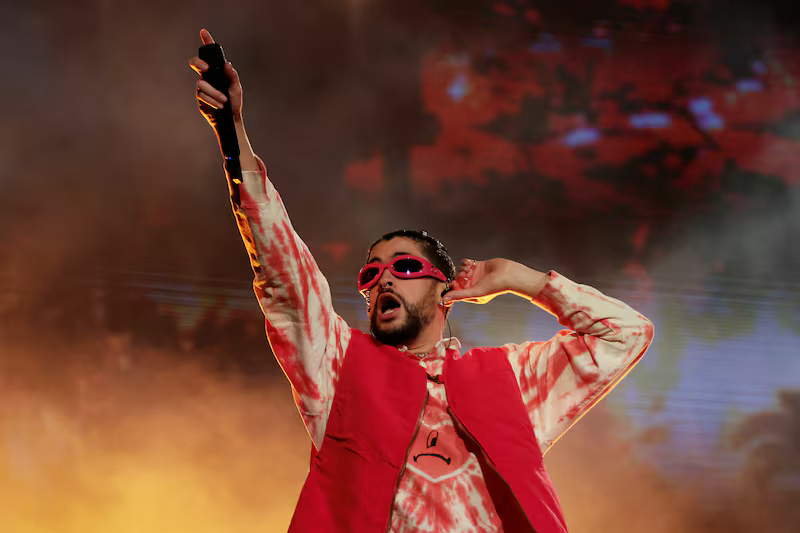
While many are familiar with reggaetón through party soundtracks like “Gasolina” or through international sensation Bad Bunny, the fascinating and political history of the music genre is sometimes overlooked.
Reggaetón’s origins can be traced back to Panama during the construction of the canal. Many of the workers on this project were from Jamaica and had carried their traditions of ska, rocksteady, and dancehall music. These music styles were translated to Spanish and later arrived in Puerto Rico, where the genre continued to evolve. During reggaetón’s early days in the 90s, many of the lyrics were used as a means of social commentary and spoke about themes such as “poverty, police brutality and sexuality”. Further, many of the early Puerto Rican pioneers of the genre were Black and used reggaetón as a platform to discuss “themes of the African diaspora, communities that are descended from native Africans, and the Black identity”. Puerto Rican artist Tego Calderón, for example, used his song “Loíza” to address racism and violence against Afro-Boricuas, like himself. One of the translated verses states “You changed the chains for handcuffs/We’re not all equal in legal terms/And this is proven in the courtrooms”.
Initially, there was a major societal and governmental pushback in Puerto Rico against the genre due to an association with “crime, violence and hypersexuality”, partly as a result of racial and economic biases. The government even raided record stores and confiscated cassettes. Critics have alleged that in order to achieve the current mainstream success, parts of the genre’s Afro-Latin roots and social commentary have been erased.
Bad Bunny, however, is an example of a reggaetón artist who has used his music to address themes of corruption, racism, gentrification, and colonialism.
To learn more about reggaetón’s social impact as well as Bad Bunny’s influence and his renowned Super Bowl halftime performance, UGA associate professor of Latinx Studies and Spanish, Dr. Sharina Maíllo-Pozo, was interviewed. As a literary scholar, she works to integrate music into her studies, and her doctoral dissertation project studied the musical and literary connection between the Dominican Republic and New York City. Her interest in reggaetón stemmed partly from her own experience living in NYC. To share her passion for the subject, she decided to teach a UGA First Year Odyssey course called Reggaetón’s Impact on Global Culture: Bad Bunny’s Music.
Maíllo-Pozo began by emphasizing music’s connection to identity and movement by explaining, “Music moves to other places and then it’s transformed in the new spaces that it inhabits.” She elaborated that with reggaetón specifically, one can see the genre’s cross-cultural evolution and Pan-Caribbean interconnection. With its dancehall origins in Jamaica, arrival in Panama, further transformation through rap and reggae in Spanish, and then its development in Puerto Rico where it became the expression of urban youth, one can clearly see continual transformation.
She then discussed her views on reggaetón being used as a medium for powerful social messages in Puerto Rico and why there was so much initial pushback from the government. Maíllo-Pozo illustrated how the genre started as “a political tool of resistance” of disadvantaged urban groups living in the caseríos, or public housing developments.
Maíllo-Pozo explained how the Puerto Rican youth used this style of music as an “expression of frustration of everyday life” in a raw and honest manner. The Puerto Rican government considered the music to be “morally corrupting” and did not want the reggaetón to become representative of Puerto Rico.
Maíllo-Pozo further highlighted that much of the music was Afro-derived as well as from lower economic areas; both race and class consciousness played a clear role in Puerto Rican society’s rejection of reggaetón. She has seen this pattern of Afro-centric rhythms being rejected or stigmatized by governments in other spaces, like with bachata in the DR, merengue, and dembow. However, the genre now bringing in money and global musical recognition for Puerto Rico has likely played a role in the reversal of the government’s anti-reggaetón stance.
She also addressed some complex themes in regard to reggaetón, discussing the genre’s origins with Afro-Latino artists and the critiques that their roles have been downplayed in some mainstream spaces.
Maíllo-Pozo discussed the difficulty of balancing the continuous evolution of the genre with new artists coming in but not wanting to erase the roots. She called out instances of whitewashing or colorism with some people associating the genre with artists of lighter complexions instead of Afro-Carribean pioneers like Tego Calderón. However, Maíllo-Pozo also drew attention to the fact that a US-centric way of conceiving race may be different than in Latin America. Ultimately, there is much nuance around this conversation, and it is essential to honor and acknowledge the Afro-derived musical expressions in reggaetón, something she appreciates Bad Bunny doing by platforming artists of Afro-descent in his shows.
She also responded to the challenge of reconciling the progressive and important messages reggaetón has promoted alongside the genre’s lyrical history of misogyny and of homophobia. Maíllo-Pozo has observed a pattern with a shift to more inclusive messaging for women and the LGBTQ+ community with some of the newer generations of reggaetón artists.
Maíllo-Pozo mentioned Bad Bunny’s song “Yo Perreo Sola”, where he advocates for women being able to dance freely without harassment in the club, and in the music video he dresses in drag with outfits including latex skirts, wigs, and dresses to fully embody this message. His song “Andrea” addresses the violence against transgender women in Puerto Rico.
While praising these bold moves by Bad Bunny, Maíllo-Pozo expressed skepticism as to whether there has been a full shift as to how women are represented in the lyrics, as Bad Bunny’s songs still contain “passivity” and obscenities in regard to women.
To conclude the interview, Maíllo-Pozo analyzed the political and social themes in Bad Bunny’s music and actions, especially in relation to his Super Bowl halftime show. She described how Bad Bunny’s show contained powerful messages and symbolism. From the opening sequence calling out the history of slavery in the Caribbean to the inclusion of the song “LO QUE LE PASÓ A HAWAii” that addresses neocolonialism and gentrification, the entire set was intentional.
One moment that really stood out to Maíllo-Pozo was Bad Bunny’s decision to include Lady Gaga in his performance. While she was initially unsure about this choice, upon further reflection she believes that Bad Bunny was teaching a lesson– “The same way that we are expecting inclusivity, we should offer inclusivity too”. Ultimately, his performance advocated for unity, allyship, and connection across different cultures and demographics, a lesson everyone should try to remember.