By: Ellie Smith
America runs on meat. From summer barbeques, to hot dog eating contests, to the McDonalds industrial complex, the meat industry has taken over the average consumer’s life while also becoming emblematic of the culture in the United States. A key aspect of the American diet is meat, both in the cultural landscape of the US and in the realities of what people are eating, with the average American eating nearly three times more animal meat than the global average.
On the other hand, the meat industry has become a lightning rod for criticism. Concerns about environmental degradation, animal welfare, and public health have pushed millions of Americans to rethink what they eat. Nearly 20 million people have eliminated meat entirely, while many more participate in trends like “Meatless Mondays” or opting for plant-based alternatives like Beyond Burgers. These individual choices reflect a broader, more pressing question: can American society move on from meat, and if so, how?
One key part of this question is how we get our meat. My family, for example, tries to source all of our animal products ethically—either procuring them ourselves or shopping from farms that claim to treat their animals well, typically by promoting pasture-raised systems where animals express natural behaviors, such as grazing in open fields. However, this comes with its own challenges. For example, cage-free eggs often come at a higher price point than conventionally produced eggs. While most Americans express a preference for ethically sourced meat and animal products, these options remain financially out of reach for many households. Similarly, plant-based alternatives like meat substitutes and dairy-free products are priced higher than their traditional counterparts, limiting accessibility despite growing demand.
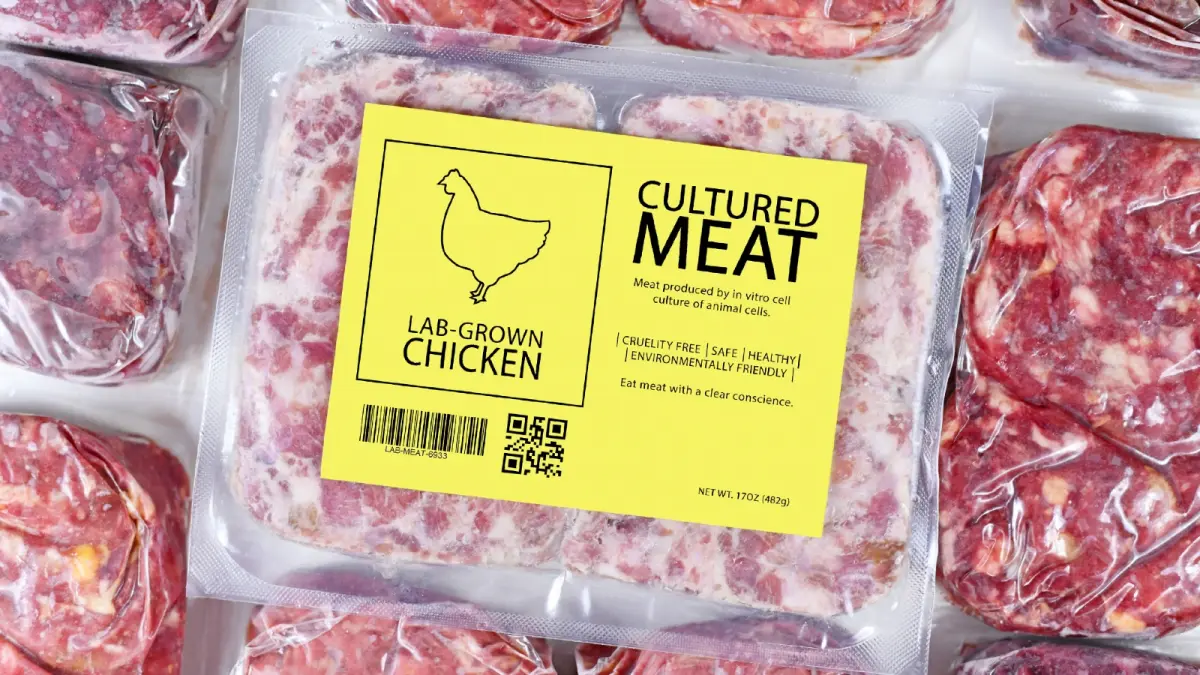
However, scientific innovation may create an alternative to expensive alternatives or loss of meat consumption entirely. Lab-grown meat, or cultured meat, involves cultivating animal cells in a controlled environment to produce edible meat. If scaled up to modern needs of production, lab-grown meat has the potential to produce meat for pennies, reducing cost below even industrial meat production levels. At a cellular level, the result is identical to conventionally produced meat without the need for slaughtering. For those concerned with the ethics of animal products, cultured meat removes the killing or suffering of animals. For those who worry about environmental impact, it offers the potential to dramatically reduce greenhouse gas emissions, land use, and water consumption associated with traditional livestock farming.
On paper, cultured meat has potential to be a solution to the “meat issue” that makes all parties happy. The taste and experience of eating meat would remain the same, but with a better moral outlook and increased environmental accountability. Yet, despite its promise, widespread adoption remains uncertain.
One major hurdle is economic feasibility. Early prototypes of lab-grown meat were shockingly expensive, costing thousands of dollars for a single burger. As technology has improved, costs have decreased significantly, but it is still difficult to scale production in a way that competes with the efficiency and affordability of industrial agriculture. Just like plant-based alternatives and ethically sourced animal products, cultured meat may struggle to move beyond niche markets until it can be produced at a price point comparable to conventional meat.
Equally significant is the issue of public perception. The “Make America Healthy Again” campaign spearheaded by RFK Jr. has brought this into mainstream political commentary, but there have been subtle, long-term movements marked by skepticism toward processed foods, GMOs, and artificial additives. This criticism creates an uphill battle for lab-grown meat. To many consumers, the idea of meat grown in a lab feels unnatural or even unsettling, leading to a psychological aversion to the idea of cultured meat. Food is deeply tied to ideas of authenticity and tradition, and anything that disrupts those notions can provoke resistance.
So, can America stop eating meat? For many, and for now, the answer is no. Food is intrinsically tied to tradition, identity, and the very structure of American society in a way that meat cannot be cleanly removed from. However, culture and tradition can shift. The meat industry is damaging, regardless of the avenue you view it from. Every individual who chooses to reduce their meat consumption, to source their meat ethically, to eat plant-based, or who supports scientific innovation to move us away from this industry makes an impact.
Ultimately, the answer to reducing the impact of our meat industry is likely a mix of all the solutions we have available. No single approach can fully address the cultural, economic, and environmental complexities of meat consumption in the United States. Instead, meaningful change will likely come from this gradual shift in consumer behavior combined with innovative practices creating a food system that is more sustainable, without requiring an abrupt or unrealistic break from tradition.