By: Kathryn Rozboril
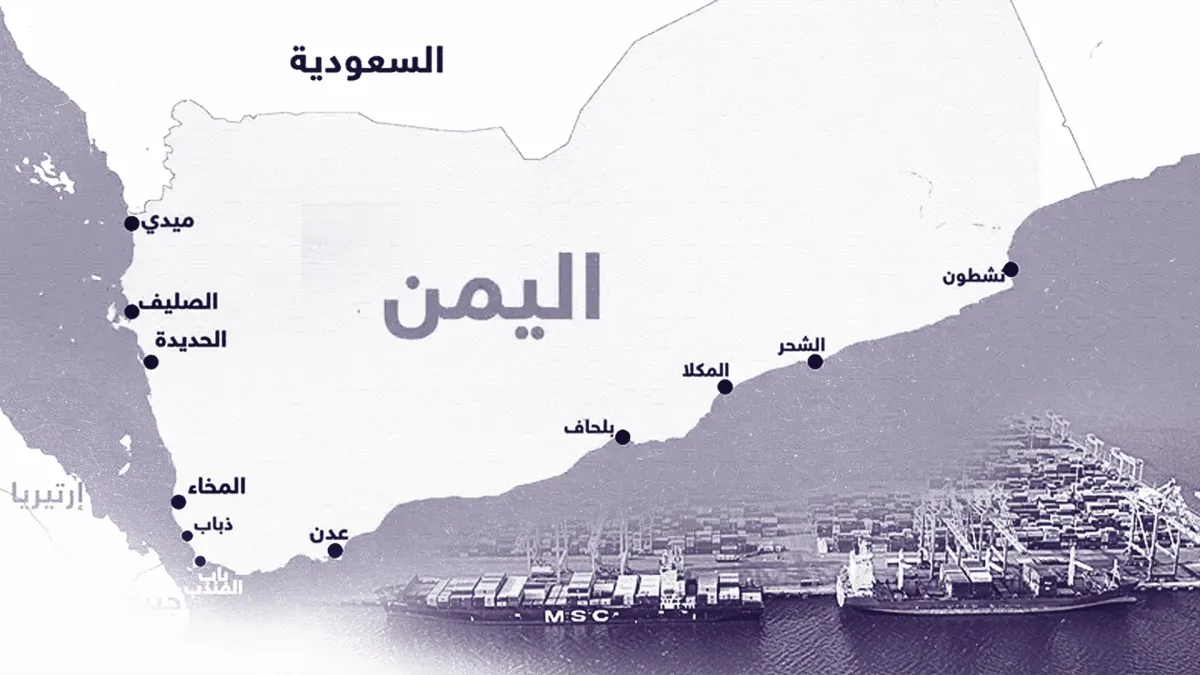
Since the start of its civil war in 2014, Yemen has been in a state of intense division and intermittent conflict. As of 2026, the country is divided between the Houthis in the North and the internationally recognized Presidential Leadership Council in the East and South. This civil war is driven not only by domestic grievances but also by regional competition. The Houthis are backed economically and militarily by Iran, while the Presidential Leadership Council (PLC) is recognized internationally and backed militarily by Saudi Arabia. The fragmentation in Yemen has left the country with one of the most severe humanitarian crises in the world, and the constant risk of renewed violence leaves civilians cut off from access to foreign aid.
The history of this conflict is complicated. A series of pro-democracy protests in Yemen, part of the 2011 Arab Spring, exposed the fragility of Yemen’s long-running dictatorship led by President Ali Abdullah Saleh. Due to mounting pressure from the Houthis, including a million-man march in Sana’a and other Yemeni cities, President Saleh ceded his power to his deputy, Abdrabbuh Mansour Hadi. However, this transition proved unstable. In 2014, Yemen descended into civil war. Houthi forces, a Shiite movement with longstanding complaints against the central government, seized control of the capital, Sana’a, and demanded a restructuring of power.
By 2015, tensions escalated further, as a Saudi-led coalition intervened to restore Hadi’s government, intensifying the conflict and religious divide. While often framed as a divide between Sunni and Shia forces, the conflict was driven by politics, territorial control, and regional intervention. The Houthis fought against tribal forces, southern separatists, and international coalitions, while the Saudi-led alliance began to fracture due to diverging priorities among its members in 2020.
In 2022, the Presidential Leadership Council was formed to replace former President Hadi and unite the anti-Houthi factions. Led by Rashad al-Alimi, the PLC brought together prominent political and military actors, including representatives from the Southern Transitional Council (STC), a separatist group in the South backed by the UAE. Despite this attempt at consolidation, Yemen remained fragmented. By the end of 2022, Yemen was effectively divided among three main powers: the Houthis in the North, the PLC in the East, and the STC in the South. Although a six-month UN-brokered ceasefire had reduced the violence, negotiations failed to produce a lasting political settlement.
Regional dynamics complicated this divide. In 2023, the Houthis expanded their role beyond Yemen into the Hamas-Israel war, launching drone and missile strikes into Israeli territory and firing on commercial shipping in the Red Sea. These acts drew responses from the United States and its allies. While a temporary ceasefire between the Houthis and the United States was reached in 2025, underlying tensions remained unresolved.
Current Crisis
The dynamic shifted again in early 2026. Throughout 2025, the Southern Transitional Council had steadily expanded its territorial control. However, after a failed STC offensive in early 2026, the PLC moved to reassert its authority by removing key STC ministers. However, despite the sidelining of the STC, peace talks between the Houthis and the PLC remained stalled, leaving Yemen’s citizens in a prolonged state of uncertainty. At the same time, Yemen continues to be shaped by broader regional conflict. The Houthis had paused their attacks on Israel and on Red Sea shipping following the Gaza ceasefire agreement in October 2025. However, following U.S. and Israeli strikes against Iran in February 2026, the group resumed strikes on Israel and Red Sea shipping, blaming Israeli military operations in Lebanon and against Hezbollah. These developments have once again put Yemen at risk of wider regional confrontation.
The humanitarian crisis caused by this conflict is devastating. An estimated 22.3 million people, nearly three-quarters of Yemen’s population, are in need of humanitarian assistance and protection. Years of conflict have destroyed Yemeni infrastructure, collapsed the healthcare system, and crippled the economy. Furthermore, climate shocks, including droughts, food insecurity, and flooding, have worsened the crisis. Civilian casualties are reported to have reached into the hundreds of thousands. Children are among the most vulnerable, with millions lacking access to safe water, sanitation, and healthcare. Humanitarian access is further constrained by security barriers. Houthi authorities have detained United Nations personnel and restricted aid operations, limiting the ability of organizations to deliver assistance. Furthermore, the efficacy of efforts made by the Presidential Leadership Council is limited by the internal conflict. As a result, large portions of the population are completely cut off from life-saving support.
Moving Forward
Providing humanitarian aid remains an urgent priority, but long-term stability will depend on political resolution. After 11 years of conflict, Yemen faces three potential trajectories: gradual stabilization through negotiated settlement, entrenched fragmentation into competing zones of control, or a return to full-scale warfare. Without a unified government, Yemen will not be able to recover from the civil war. Economic conditions continue to deteriorate as supply chains are disrupted, and trade in the Red Sea remains unstable. The fragile truce between the Houthis and PLC contributes to ongoing uncertainty, disrupting aid and investment. Furthermore, Yemen’s future is tied to regional dynamics, as the risk of being drawn deeper into conflict with Iran, Israel, and the Gulf states remains high. Internal political weakness, particularly involving the legitimacy of the Presidential Leadership Council, complicates efforts to negotiate peace. For Yemen to move forward, political actors must not only reach a permanent ceasefire but also build institutions capable of governing a fractured state and restoring public trust. The longer Yemen remains divided, the closer the country moves toward permanent fragmentation.