By: Sarah Kate Maher
Women’s careers and endeavors have historically acted as a pulse check on how an overall population’s politics and sentiments lean. To many, the most distinguishable example of this lies in the entrance of women in the workforce in WWII and the resulting acceptance of a working woman. However, the rising ‘tradwife’ movement seems to note a new cultural shift – that of a “traditional,” nonworking wife and mother, with a duty to solely submit to her husband. How did this growing movement come into fruition, and what does it mean for the population at large?
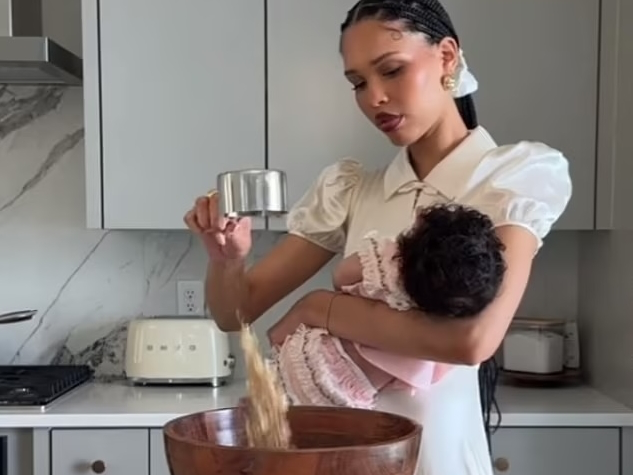
‘Tradwife’ is a slang term for “traditional wife,” which social media influencers like Estee Williams define as a womanly responsibility of homemaking and childrearing while the husband fulfills the role of the single breadwinner. Another common aspect of being a ‘tradwife,’ represents a practice of “complete submission” and service to a woman’s male partner. The ‘tradwife’ movement itself has been popularized on social media, where influencers like Nara Smith and Hannah Neeleman share a glamourized version of their lives as mothers and homemakers. Smith alone has amassed over 25 million views on multiple posts, and Neeleman boasts a TikTok following of over 10 million users.
The ‘tradwife’ movement itself has its earliest roots in mid-20th century ideals and norms. The resurgence of the movement, however, happened around 2020, when the COVID-19 pandemic forced women (and everyone) to stay at home. Undoubtedly, individuals had more time to develop hobbies like baking, crafting, and cooking —activities that are emblematic of the ‘tradwife’ lifestyle. Further, individuals were able to spend more time on social media, where the seemingly happy, content lifestyles of ‘tradwife’ influencers became ever more appealing.
In 2024, Sykes and Hopner found that ‘tradwives’ on social media commodify their traditional, right-wing lifestyles in order to spread their ideologies. Therefore, the rising ‘tradwife’ movement is not only a return to traditional values, but intentionally shaped by social media influencers. Specifically, influencers studied by Sykes and Hopner expand their captive audiences by portraying their traditional, right-wing lifestyle as an “aesthetic.” In another study, Pilyarchuk and Graf further define the ‘tradwife’ movement as a “macro-trend of re-traditionalization, anti-gender ideology, and anti-feminism movements” playing out on social media and other internet platforms. Collectively, the literature concludes that the rise of the movement is not unintentional, and is instead engineered by influencers who present daily content that subconsciously attracts followers not only on social media, but to the movement as a whole in real life.
To have influence is to have such a deep effect on an audience that your belief system unconsciously affects the actions and ideologies of others. ‘Tradwife’ influencers employ this mechanism by utilizing multiple social media platforms for ultimate amplification and algorithmic dominance, intentionally shifting content strategies to have the greatest impact on each platform’s unique audience. By frequently posting aestheticized versions of traditional lifestyles (e.g. homemaking), ‘tradwife’ influencers transform a conservative way of life into engaging, consumable content. The aestheticization of the ‘tradwife’ lifestyle turns a previously unpopular way of life into an ambition in the eyes of the audience. The sustained exposure and aestheticization users experience by consuming seemingly harmless content makes a more traditional lifestyle feel normal and achievable, causing users to join the movement in pursuit of this ideal.
Right now, it’s unclear whether the ‘tradwife’ movement will continue barrelling into the public and multiplying in size going forward. ‘Tradwife’ influencers, though facing a considerable amount of backlash and negative discourse, are still rising in popularity. Audiences have already had the underlying ‘tradwife’ values and ideologies embedded in their daily lives, and the movement has taken an unrelenting hold on generations of families. Undoubtedly, the movement will continue to influence wider discourse and norms, as it subtly plants these traditional, conservative seeds in social media users’ minds. Thus, the rise of the ‘tradwife’ movement should not go unnoticed nor underestimated, as it exemplifies wider cultural shifts, and may precede similar movements to come.