By: Justin Connelly
Picture this: Armor-clad warriors charge forward, clashing with their foes. With brute force, they push forward, clearing a path for an aerial assault from behind. The jeers and screams of supporters and rivals are deafening. Now, tell me: are you on a battlefield, or at a Georgia Football game? Obviously this is intentionally vague, but sports have more in common with battle than we might think.
Both are forms of competition. In a world with destructive nuclear weapons, direct conflict between world powers has moved away from the battlefield. During the Cold War, we saw this play out in several ways. The USA and USSR raced to Space instead of fighting each other directly. Another way they fought was through international sports competitions.
In the next few years, the United States will play host to both the World Cup and the Summer Olympics. The Federal Government has approved $625 million in spending for the World Cup and over $1 billion for the 2028 Olympic Games in Los Angeles. The US and other states have realized that sports play an important role in national identity, especially in a world without direct conflict between states.
But why would states need to supplement conflict? Political Scientist Charles Tilly argued that: “War made the state, and the state made war.” The basis of his argument was that modern states only achieved the level of organization and collaboration necessary to be considered a state because war necessitated it. Bureaucracies and taxation systems were revolutionized by states that needed this organization to raise armies and build defenses. According to this hypothesis, states (and their citizens) crave competition because it is a prerequisite of their existence.
For Americans, the Revolutionary War gave the United States its independence. The Mexican-American War 15% of its land. World War 2 made the United States the mightiest industrial power in the world. Time and again, the United States and its citizens have been rewarded for their craving for competition. Historically, competition has rewarded those who are around today, both in terms of people and state. The states we have today have been trained to crave competition.
This has some implications. While, sadly, conflict has never left the world, nuclear weapons and transformative alliances have drastically reduced conflicts between European and American countries. The United Kingdom declared War 17 times from 1803 to 1942, the United States 11 times from 1812 to 1942, and Brazil was involved in 20 armed domestic and international conflicts from 1822 to 1965, to name a few. The most powerful states in the world were repeatedly in conflict. They have not been completely at peace in the last half-century, but the scope of conflicts has drastically reduced for them and many other powers.
Conflict can also drive unity, and from that, legitimacy for the government. During conflict, citizens’ approval of elected officials and the government as a whole typically surges. Citizens rally around a common enemy and unite around national symbols as they seek to protect what unites them. In order for a state to be a state, they need to have successfully navigated conflict, which requires a great deal of cooperation.
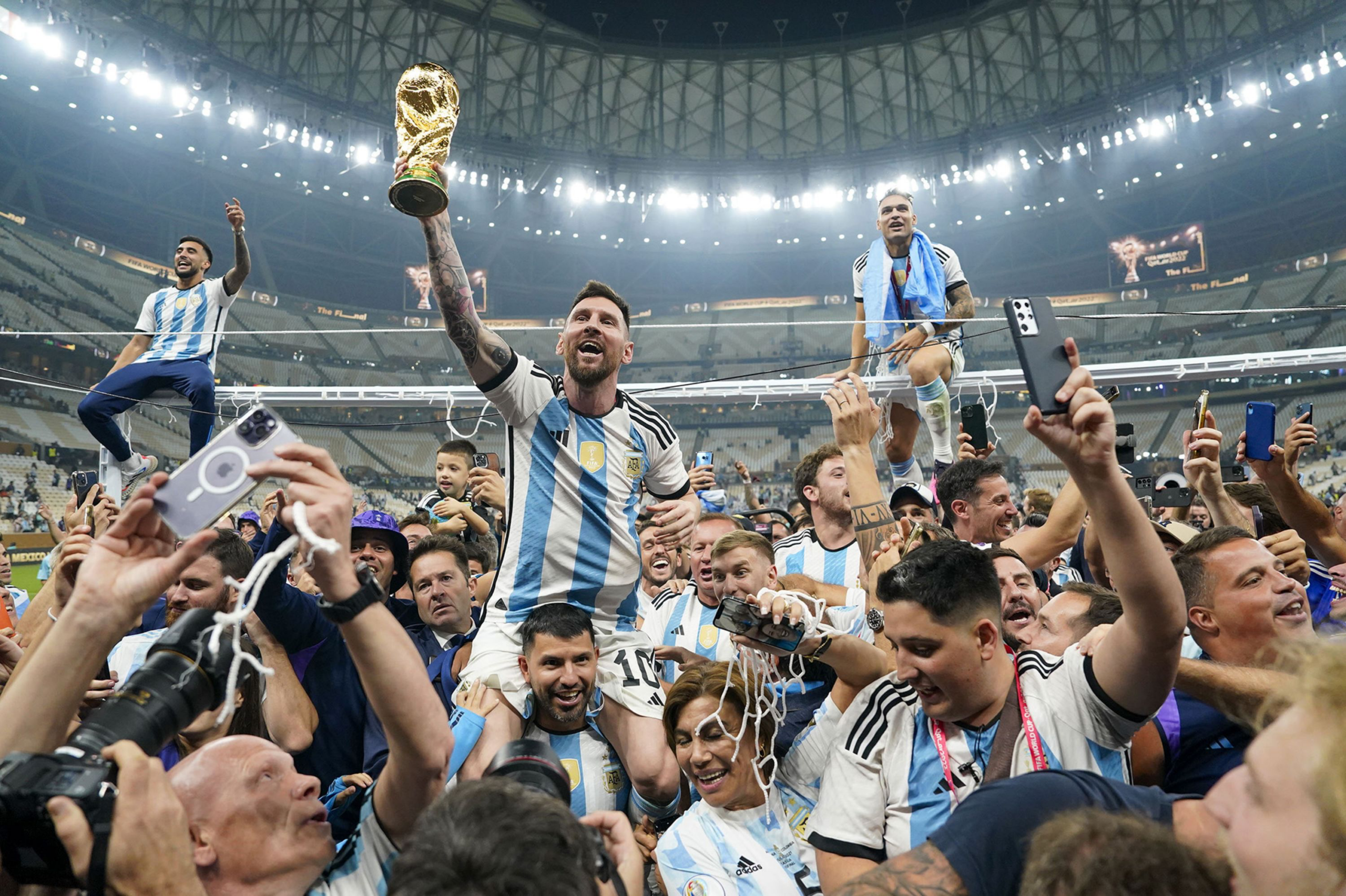
To supplement this national pride, sports have filled a similar role. Sports offer both unity and projections of strength for states, much the same as war. Throughout history, many leaders have realized this. A prominent example of this is the 1936 Berlin Olympics, where Nazi Germany sought to display state unity and project power, by attempting to showcase the physical fitness of their citizens and the massive supporter Germans showed. Of course, sports also served as a battlefield in the Cold War, providing an arena for metaphorical war to be waged. National pride surged when the amateur-filled US Hockey team defeated the heavily favored USSR team en route to a Gold medal at the 1980 Winter Games in Lake Placid, New York. Diplomacy has also played out via sports instead of via armies. The USA boycotted the 1980 Summer Games in Moscow to protest the Soviet invasion of Afghanistan, and the USSR returned the favor by boycotting the 1984 Summer Games in Los Angeles.
Sports are undoubtedly a source of national pride everywhere today as well. Tempers run high when nations battle in the Olympics or the World Cup. Sometimes, so high that the war-like psychological role that sports can play can spill over into real conflict. This happened in 1969, when Central American neighbors Honduras and El Salvador went to war following a World Cup Qualifying match between the two national teams. Rioting following high-stakes matches proved to be the galvanizing event for war, following months of high tensions between the two states.
Why are people so passionate about sports? First, when national teams come together, they set aside their divisions and play only as Americans. Basketball superstars LeBron James and Stephen Curry have faced off 5 times in the NBA Postseason, but happily joined forces to battle for Team USA en route to gold in the 2024 Olympics. The same can be said for fans: regardless of allegiances and the divides felt domestically, American fans are united in their national status as Americans.
Sports are also a near-universal medium. Almost everyone has an individual relationship with at least one sport. 46% of Brazilians identify Association Football (soccer) as their favorite sport, and therefore feel a connection to and ferocious pride for their 5x World Cup winning national team. The 2022 World Cup is estimated to have reached 5 billion people. So many people, at one point or another, have kicked around a soccer ball with loved ones and friends. Sports provide a uniquely universal experience.
A third and final reason sports play this role is the avenue they can provide for cultural expression. Some sports enjoy broad, global popularity, but many others are much more unique. When I say “football,” many of you think of American football, while globally, soccer comes to mind. Many Americans feel a tie to football as it is uniquely American. Many have familial ties to the game, whether through a favorite team or a yearly Thanksgiving game with family. The United States can express its individuality through its love of football and will do so at the 2028 Olympics, when flag football will be played for the first time.
Why should we care about these competitions being held in the United States? They offer us a chance to provide hospitality and show the United States’ desire to promote cooperation among nations during a time of great uncertainty worldwide. If people can enjoy something as simple as a soccer game with other countries without hostility, people are much better equipped to establish constructive dialogues with them. Further, they offer Americans a chance to unite as Americans. The United States is beautifully diverse; it enjoys the presence of more cultures, backgrounds, and identities than almost any nation in the world. This diversity is what unites Americans. Tensions are high in the United States, but if people can come together and cheer on sports teams as one American nation, people are far better positioned to embrace diversity and work toward a better future for all.