By: Karisha Khadayat
When hospitals run short on critical drugs, the headlines usually cite ‘supply chain disruptions’ or ‘manufacturing issues.’ But behind these assertions are children whose treatments hang in the balance. Pediatric oncologic patients, or young children fighting cancer, are among the most vulnerable victims of America’s persistent drug shortages. This is a crisis that rarely makes national news. When it does, it often doesn’t center the children it harms.
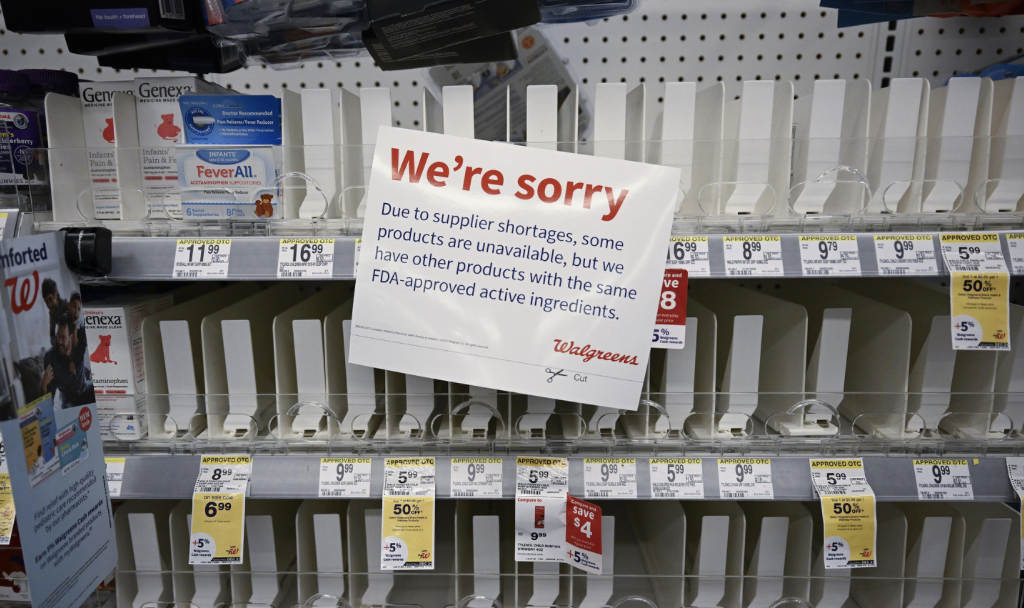
In 2023 alone, the United States faced over 300 active drug shortages, many of them involving generic chemotherapy agents and antibiotics used in pediatric care. For young patients, these shortages can determine whether treatment proceeds on time, is delayed, or changes entirely. A child’s chemotherapy plan might be completely changed not because of new medical data and research but because the intended drug no longer exists on the hospital shelf.
While public conversations about shortages often focus on logistical fixes or market inefficiencies, few look into the drastic toll of forcing oncologists and families to make decisions that can either prolong or worsen their child’s’ care. According to the American Society of Health-System Pharmacists (ASHP), generic injectable drugs, a mainstay of pediatric oncology, are especially at risk because they yield slim profit margins. Actually, they tend to be far more beneficial for a patient and their family for several reasons: they are inexpensive in comparison to name-branded drugs, they are more accessible as only “some anticancer drugs are only available as generics,” and they ensure a consistent supply, ultimately reducing the risk of treatment delays. When a corporate dispute arises or manufacturing issues suddenly ‘manifest,’ there’s little financial incentive for other manufacturers to step in. So who bears the responsibility when a child’s life is compromised by shortages that could have been prevented?
According to the U.S. Food and Drug Administration (FDA), a drug shortage occurs when “the total supply of all clinically interchangeable versions of an FDA-regulated drug is inadequate to meet the current or projected demand.”
Between 2018 and 2024, the number of active drug shortages in the United States rose sharply, with the ASHP reporting more than 300 ongoing shortages. Many of these involve injectable chemotherapy drugs that are critical to pediatric care. Across the United States, hospital pharmacists and patients have reported that drug shortages now affect treatment planning on a daily basis. These shortages are often attributed to supply chain issues, but that phrase oversimplifies other contributing factors in regards to drug-shortages like manufacturing and quality control issues, raw material scarcity, and corporate decisions. Generic chemotherapy drugs, for instance, yield thin profit margins, discouraging multiple manufacturers from producing them. For instance, when even one production line goes offline due to quality-control violations or lack of raw materials, the entire national supply can collapse within a matter of time. The financial strain on healthcare institutions is another pressing concern. A survey revealed that 79% of pediatric families “exceeded their budgets due to drug shortages, some by up to 30%.” This financial burden extends beyond the immediate costs of treatment. Families often face travel expenses to reach alternative hospitals with available medications or must take unpaid leave from work during treatment delays. Over time, these shortages affect both the economic and emotional strain on households already dealing with the trauma of childhood cancer.
Children are especially vulnerable because pediatric oncology depends on older generic drugs that lack modern substitutes and must be tailored to each child’s weight and diagnosis. A medication like methotrexate, one of the most common pediatric chemotherapy agents, has faced multiple national shortages in the last decade, forcing clinicians to ration doses and delay treatments. Furthermore, a 2023 survey found that 76% of pediatric cancer centers experienced and suffered from methotrexate shortages. With this particular survey, clinics’ ‘combatted’ the shortage by “…dose rounding by 10% or less, which was used at 18 centers” out of the 67 surveyed. Other methods include hospitals relying on compounding pharmacies to respond to these inadequacies by creating small-batch formulations. However, this practice introduces new safety risks and variability in dosing. The result is a convoluted ecosystem where pediatric care depends on whether hospitals can formulate situations fast enough to keep their patients alive.
Pediatric oncology exposes the moral tension within this system. In some hospitals, physicians have resorted to experimental substitutions, using drugs designed for adults or those still in early clinical trials. These improvisations, though sometimes necessary, carry unknown risks. One recent review found that during chemotherapy drug shortages, substitutions often resulted in higher toxicity or reduced efficacy.
To show how drug shortages affect patients outside of cancer treatment, I spoke with Betsy Timmons, who was diagnosed with Postural Orthostatic Tachycardia Syndrome (POTS) in high school. POTS is a condition where the body struggles to regulate blood flow. People often get dizzy, lightheaded, extremely tired, or feel like their heart is racing just from standing up. Many patients rely on medications like midodrine, fludrocortisone, beta blockers, or even IV saline to function. Some of these medications have gone in and out of shortage over the past few years.
Khadayat: Tell me about a time when a shortage directly interrupted your treatment.
Timmons: I was prescribed dextroamphetamine to help manage my extreme fatigue. When I went to refill it, the pharmacy told me that there was a shortage and they had no idea when it would be back in stock. Because of this, I had to stretch my dosage for as long as I could and I sometimes ran out completely and had to stop taking it for weeks at a time.
Khadayat: How did the delay or unavailability of the medication impact you?
Timmons: Physically, I experienced extreme fatigue to the point where I could hardly get out of bed or keep my eyes open. Emotionally, I had so many feelings regarding the situation: anxiety, confusion, helplessness, frustration. I especially remember feeling an overwhelming sense of helplessness. To me, it was almost like I was being punished simply for getting sick and needing additional support. It also meant that I missed out on school, family events, hangouts with friends, etc. Instead of living my normal, day-to-day life, I was trapped inside in an endless cycle of sleep and practically bedridden.
Khadayat: How have these shortages affected your family?
Timmons: My mom had to constantly call pharmacies and insurance companies not only to try to find the medication, but even just get an answer about when we could expect it to be restocked. It was so incredibly stressful for my entire family and I know that it broke their heart to see me like that.
Khadayat: What would you like policymakers to understand about these shortages?
Timmons: I want them to know that I am just as human as they are and deserve to have access to the medications that allow me to function. In addition to that, I also want them to remember that I am not alone. There are so many others who desperately want to give society all that they have to offer but are unable to simply because they are not given the medications that they need. We are not asking for anything unreasonable, we are simply asking for the chance to contribute.
Timmons’ experience is not an isolated one. Teens and young adults with POTS have reported similar struggles finding midodrine and IV saline in recent shortage waves related to manufacturing delays and hospital supply rationing. The problem is widespread, and it affects whether people can simply stand up without passing out.
While patients and families are left scrambling to secure the medications they rely on, it’s also important to understand what this same shortage looks like in research labs, as this is where the drugs that eventually reach patients are first studied. To explore that side, I spoke with Dr. Ilana Chefetz-Menaker, a principal investigator (PI) whose primary area of study is ovarian cancer. Unlike pediatric cancer(s), ovarian cancer primarily affects women over the age of 50. Still, she works with many of the same chemotherapy agents used across oncology.
Dr. Chefetz explained that drug shortages look very different in the lab than they do in the clinic. In research, labs use research-grade versions of chemotherapy drugs rather than the FDA-approved clinical versions given to patients. Because of that flexibility, shortages that derail treatment plans in hospitals rarely halt laboratory work.
Chefetz says, “In research we don’t need the same grade of drugs that patients receive. We have many alternative vendors. So we don’t feel the shortages in the same way the clinical side does.”
However, research is not immune to supply problems altogether. During the COVID-19 pandemic, her lab, like many others, faced shortages of basic supplies such as plasticware, reagents, and kits needed for experiments.
When those materials became unavailable, research simply had to stop. “You just postpone everything,” she explained.
The contrast between Dr. Chefetz’s research experience and pediatric oncology patients is clear: in a research lab, a shortage means a delay. In the clinic, a shortage can mean a child receives a weaker drug, a riskier substitute, or no treatment at all. While research can pause, children cannot.
Ultimately, these recurring shortages have prompted growing concern not only among clinicians but also among policymakers. As hospitals struggle to maintain continuity of care, federal lawmakers have begun focusing on drug shortages as a national public health issue. In February 2024, the United States House Committee on Ways and Means held a hearing titled “Chronic Drug Shortages,” where witnesses highlighted that more than 250 medications were actively in shortage, including treatments for cancer and pediatric conditions. One major concern was that the US relied on foreign sources of active pharmaceutical ingredients for many generics, making supply vulnerable. Those discussions have since turned into legislative proposals like H.R. 5316, “Drug Shortage Compounding Patient Access Act of 2025”, which would amend the Federal Food, Drug, and Cosmetic Act to ease access to certain compounded medications when a drug is on the shortage list. While this bill aims to provide temporary relief, many experts also attest that the more complex economic pressures behind generic injectable production (e.g., thin profit margins and high manufacturing costs) must also be addressed for sustainable change.
While legislative efforts like H.R. 5316 offer short-term relief, they cannot fully resolve the systemic issues that create persistent shortages. The responsibility for drug shortages is shared. Pharmaceutical companies that are driven by slim profit margins must prioritize production reliability. Healthcare institutions must advocate for patient-centered supply chains. Policymakers must implement reforms that prevent avoidable shortages. Ultimately, children should not bear the consequences of economic or regulatory inefficiencies. It is imperative that every pediatric oncologic patient receives timely treatment, as this represents a moral standard by which we must evaluate the accountability of all stakeholders within the drug supply-chain ecosystem.