By: Dawson James
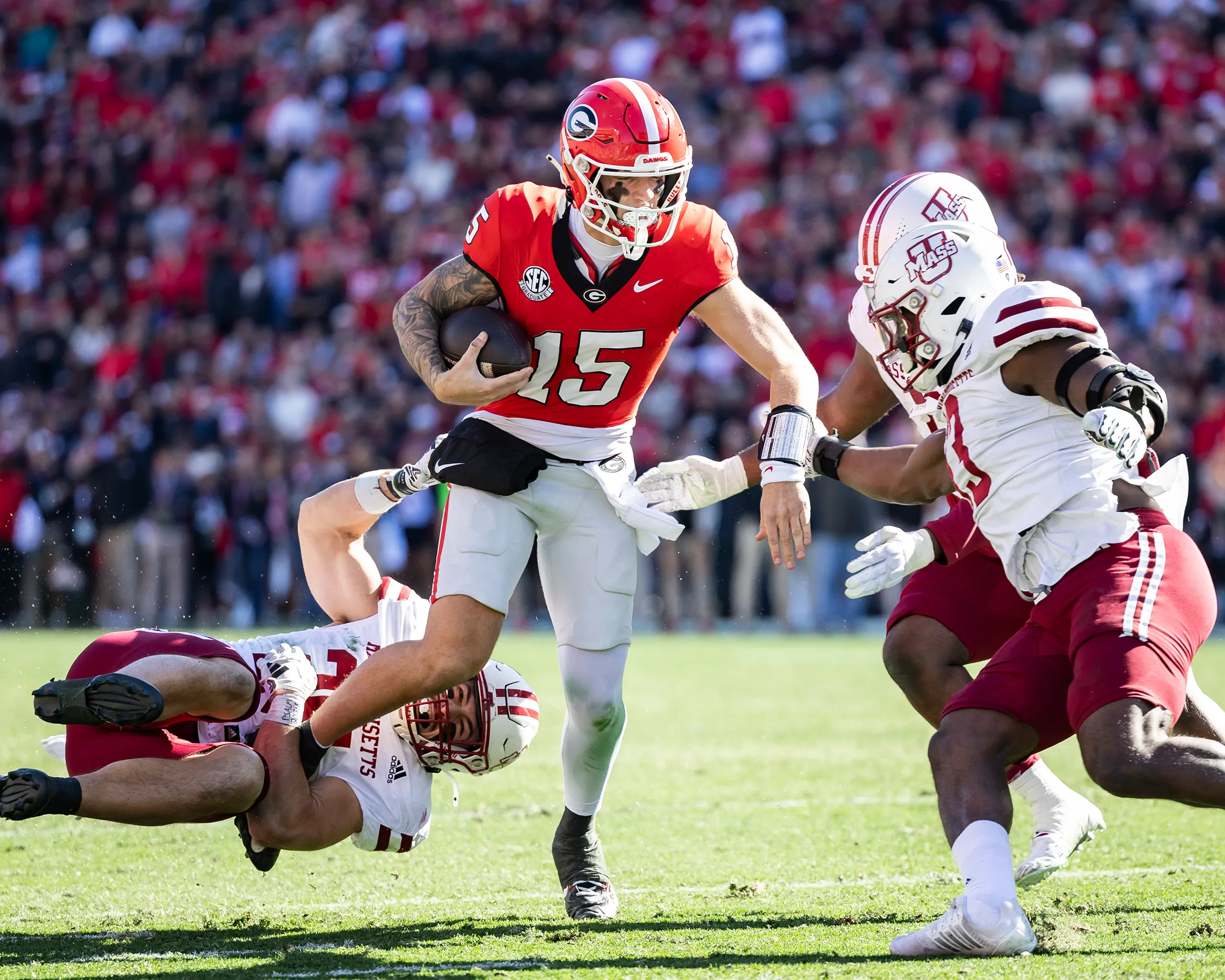
FOOTBALL IS DYING! The NFL may be seeing a resurgence in popularity, but don’t let statistics fool you – football is slowly losing its place as America’s favorite sport. Younger generations are becoming less interested in the sport that has long dominated American interest. Instead they look to an unlikely choice – Fútbol.
The popularity of the NFL is increasing heavily, with 2025 viewership reaching 18.5 million average weekly viewers by week 5 of the season and the 2025 Superbowl having a record 127 million viewers. However, despite this surge in popularity, football is losing support among younger generations, placing the future of American football at risk.
Gen Z is less interested in sports as a whole. One report done by the mourning consult claims that 33% of Gen Z have not watched televised sports, while only 18% have even been to a live sporting event. This is drastically low compared to millennials, who have 25% and 22% respectively. Additionally, kids and teens participating in youth sports are less interested in football. From 2019-2022, overall participation in both team and individual sports saw an increase for youth; with ages 6-12 seeing a 4.8% increase and ages 13-17 seeing a 4.9% increase. However, tackle football did not share this growth. 2020-2021 saw a 18% decrease in participation for ages 6-12. This same period saw only 1% growth for adolescents aged 13-17, and has decreased by .2% since 2019. But while football is declining, fútbol is on the rise.
Fútbol, or soccer, has seen an increase in viewership and participation, especially among younger demographics. In the same period that youth football saw a mass decline, soccer participation saw 19.5% growth among ages 6-12 and 18.6% growth among ages 13-17. American viewership of non-American soccer games has more than doubled with a 60% increase between 2018 and 2024. This development is seen most heavily in younger audiences. Major League Soccer (MLS) claims to have the youngest fan base with 54% of their viewers being under the age of 45. Moreover, MLS also appeals to the diversity of the US, with 40% of viewers being people of color. Interest in the MLS is especially prevalent among Latino Americans, as 30% of MLS fans are Latino. This growth in Latino viewership was spurred through developing rivalry between MLS and Mexico’s domestic Liga MX league. Spanish speaking communities have long watched Liga MX, but as MLS spreads and becomes more accessible, viewership for both leagues increase.
MLS growth has also been spurred by the introduction of internationally recognized players. In 2022, following his World Cup victory, Lionel Messi joined Inter Miami. He brought with him Sergio Busquets, Jordi Alba, and Luis Suarez, all big names from the Spanish soccer league, LaLiga. Oliver Giroud, the top scorer of the French National Team, also moved to the US, now playing for the Los Angeles Football Club. This influx of big names to the MLS has brought international attention to US Soccer and increased the already growing interest in Soccer among American youth.
This increased interest in soccer comes as a major sporting event is on the horizon –The FIFA World Cup. Acting as the largest sporting event in the world, the 2022 World Cup had 1.5 billion viewers and 3.4 million in person spectators. In the same year, the Superbowl had only 100 million viewers. The World Cup brings international audiences together from every continent. In 2026 the World Cup will be hosted, in part, by the US. This event is not only sure to bring in millions of soccer fans from around the world, it has already kick started growth in the soccer industry. This year, the US Soccer Federation (US Soccer) reported a revenue of $263.7 million, a 37% increase since 2024. This has come from corporate sponsors as well as the creation of a $250 million National Training Center. The center, located in Fayetteville, Georgia, is over 200 acres and will not only serve as the headquarters for US Soccer, but will also work as the training facility for all 27 national teams, as well as the next generation of players, coaches, and referees.
The creation of this facility precedes not only the 2026 World Cup, but also the 2028 Olympics, and the 2031 Women’s World Cup, which the US is bidding to host. The facility is not only preparing the US for an increase in popularity, it is making Soccer teams in the US competitive on an international level. A move that will further increase the growth of Soccer in the US.
It is clear that soccer is on the rise in the US, and as the US prepares to enter the center spotlight for international soccer, it appears as though soccer will become cemented as a staple of sports in the US. Young Americans are less interested in football, preferring the more accessible and internationally recognized sport of soccer. And as the younger generation becomes more prevalent in American politics and culture, it is possible that football will lose its place at the center of American athletics, and Americans will soon be able to say football is dead, long live fútbol.