By: Prarti Satya
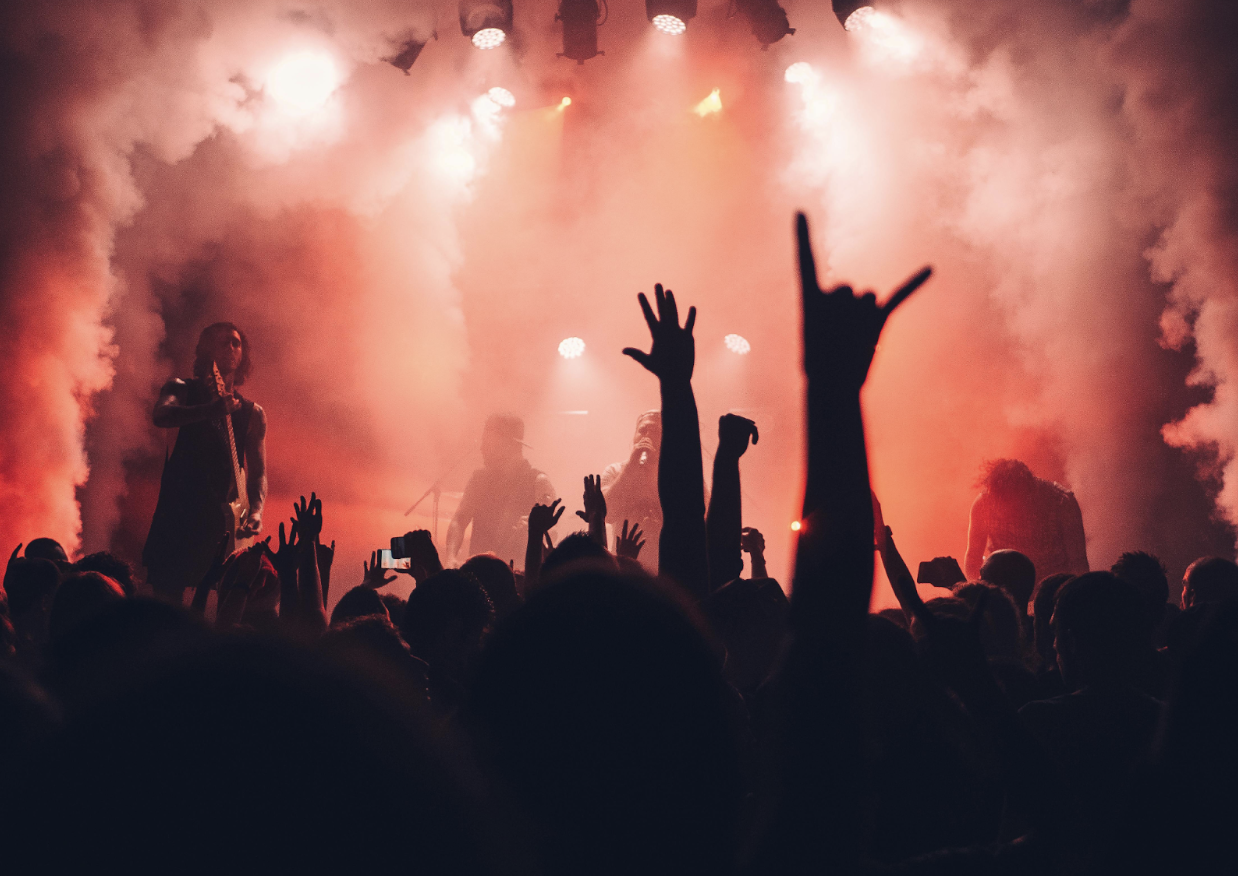
Music has, throughout history, been one of the most effective means of human connection. Various genres draw inspiration from different walks of life, and a song has always been a powerful piece of storytelling. But the stories told through music are not always mere stories; music has also been a highly influential dispersal tool for political change and calls to action.
For instance, the genres of jazz and blues are closely related to the African American community, with their roots in celebrating community and expressing sentiments of formerly enslaved people. Additionally, music has been used as a way to criticize the government for their decisions and the treatment of their constituents, often through exploring anti-war messaging. One example of this is in the song “Born in the USA” by Bruce Springsteen, which has historically been misunderstood as a song of patriotism due to its line: “I was born in the USA.” However, the song directly criticizes the US’s mistreatment of Vietnam War veterans through its verses.
Current political discourse on social media has skewed perceptions of what constitutes political activism. Historically, music has been used as a tool to communicate political messages, but the public’s focus has shifted to examining celebrities’ engagement with politics outside of music as a way of receiving political news. This is often to the detriment of political discussion, forcing celebrities to speak in a formalized manner about issues they may not be informed about and diluting the impact of political discussion from professionals within the field.
In recent years, there has been increased pressure for musicians to engage in political discourse outside of their art. In many circumstances, artists without the political acumen to engage in nuanced discussion find themselves faced with deep backlash for not engaging in politics. A recent example of a performer met with such backlash is Chappell Roan, a pop music artist who achieved a rapid rise to fame. Roan found herself amid controversy surrounding her initial refusal to publicly back a candidate for the 2024 U.S. presidential election. She instead took a neutral stance on the election, a decision that was met with frustration online from fans.
Chappell Roan’s refusal to take a stance and her subsequent video posted to TikTok, in which she finally endorses candidate Kamala Harris, garnered attention given Roan’s advocacy for the LGBTQ+ community and the fan perception that this makes her a political figurehead. However, her video does not present any of the nuance she seems to want to bring to discussions of politics. Instead, Roan names a few issues, specifically mentioning “Palestine” and “every marginalized community in the world” without presenting additional commentary. Her inability to articulate a stance on these issues serve only to dilute the sort of political discussion that her art implies that she wants to have, and her name being attached to this video only seems to divert attention away from political discussions of substance.
While people view Roan’s music as political, it does not indicate any level of deeper awareness regarding political issues. For this reason, it is deeply problematic to look up to celebrities such as Chappell Roan for guidance on current events. Roan’s music can be contrasted with lyricism that does directly address political issues. One of the most notable songs that accomplishes this is Billie Holiday’s song “Strange Fruit.” In the first verse, Holiday makes direct reference to the lynching of African American people during the 1930s: “Southern trees bear a strange fruit/Blood on the leaves and blood at the root/Black bodies swinging in the Southern breeze/Strange fruit hanging from the poplar trees.” This explicit reference is what makes Holiday’s music political, something that Chappell Roan has yet to implement in her own art.
The impact of public figures speaking about politics is undeniable. However, it is important to recognize that not all celebrities are engaged in this sphere, and they often do not possess the political awareness to contribute meaningfully. Pressuring them to do so also has destructive consequences. This points to a deeper issue of citizens getting their news and information from celebrities, extending a blind faith to the politics of musicians that they like and expecting them to always make their opinion known. It would be more productive for fans to listen to experts on politics, rather than their favorite musicians, to get their political news.