By: Nandita Suri
Although the United States has been an Arctic nation since purchasing Alaska in 1867, this region has rarely been central to U.S. national security priorities. For many Americans, the Arctic is an irrelevant frontier that is both geographically and culturally far. However, in light of conditions changing in the Arctic and foreign adversaries taking on an active role in the region, the U.S. should place a greater strategic importance.
In 1935, U.S. Army General Billy Mitchell testified before Congress and announced that Alaska was “the most important strategic place in the world.” Geographically, Alaska is the state that makes the U.S. an Arctic nation. Surrounded by the Pacific Ocean, Bering and Chukchi Seas, and the Arctic Ocean, Alaska gives the U.S. access to exclusive shipping routes, abundant national resources, and unmarred scientific research potential. Even during the Soviet era, the Arctic caused tensions between the U.S. and USSR, as both viewed the space as an area that was militarily strategic. Interest from Soviet forces motivated the U.S. to keep a presence in the region, but after the end of the Cold War and dissolution of the Soviet Union in 1991, the U.S. significantly reduced its military interest in the Arctic region and opted to engage in softer forms of collaboration with Russia, such as through scientific research.
Proximity to major global powers and central trade routes makes the Arctic an unparalleled strategic arena. It is home to the Bering Strait, the passage that connects the Arctic and Pacific Oceans and which is a part of the Northwest Passage. At its narrowest point, the Strait separates Russia and the U.S. by a little over 2 miles. As the earth’s warming climate melts sea ice and increases year-round access to previously frozen-over trade routes, the Bering Strait is expected to become an even more critical shipping and military fixture in global trade and military strategy. Due to Alaska’s proximity to the area, the U.S. needs to start taking a more aggressive stance on its own Arctic security, as adversaries have demonstrated interest in and are moving forward with development in the region. Furthermore, global warming opens international access to the wealth of natural resources located in the Arctic. This includes oil, natural gas, and fossil fuel reserves. The presence of these resources further incentivizes other countries without easy access to the Arctic to establish themselves in some capacity within the region –if they do so before the U.S. updates its Arctic policy, these nations will have a significant advantage by the time all the ice melts, as melting ice creates new opportunities for economic and military development.
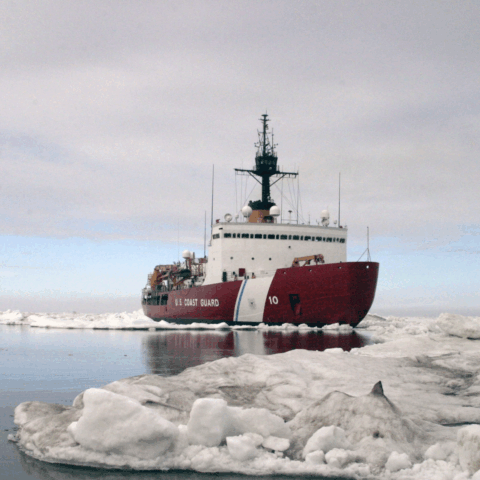
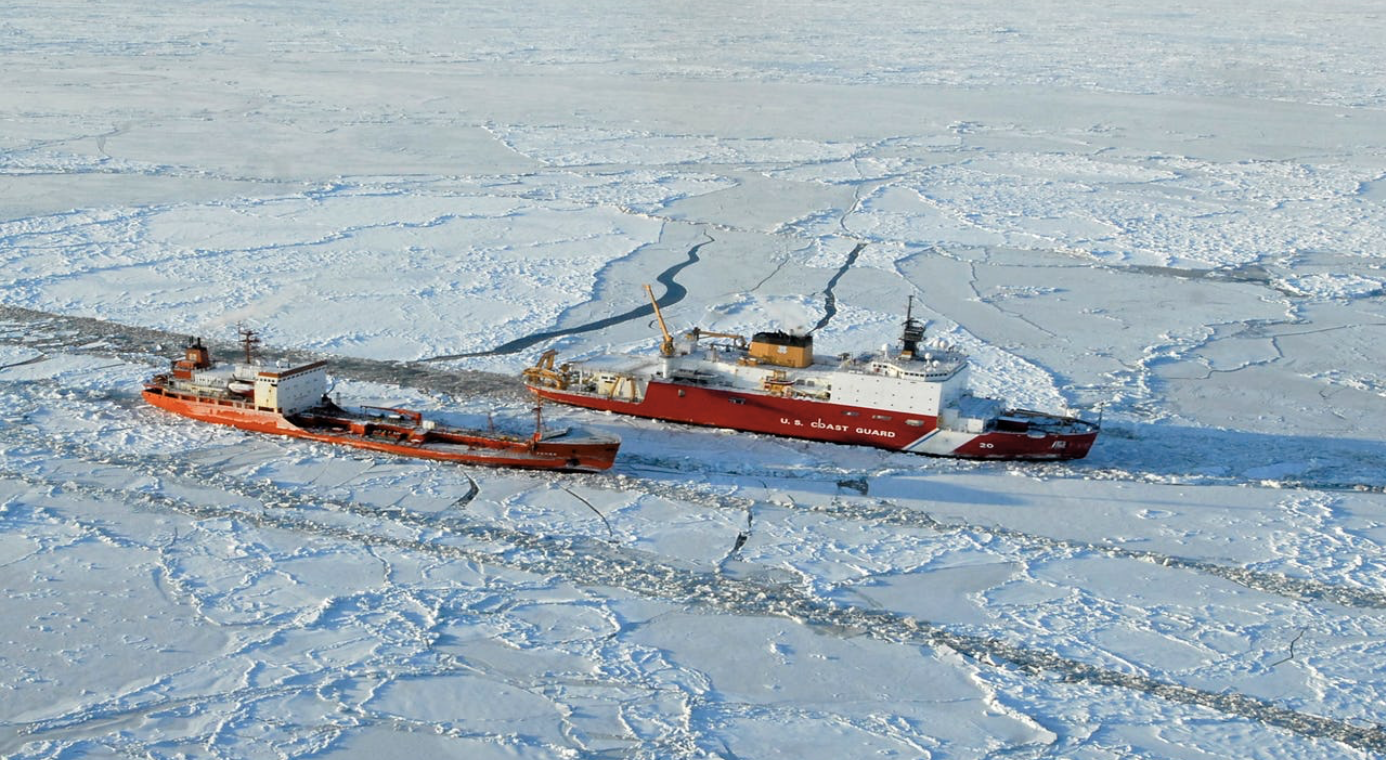
Despite the Arctic’s growing geopolitical importance, the U.S. has taken surprisingly few proactive measures to establish a sustained presence in the Arctic or to prepare itself for potential national security threats . The 2019 U.S. Arctic strategy outlined two major focus points: national security and multilateralism, while also tasking the U.S. Coast Guard with protecting American Homeland Security in the Arctic. However, the importance of Arctic Security to national security fell after the 2019 release, as it was notably absent in the 2021 Interim U.S. National Security Strategy. Subsequent releases of the U.S. Arctic Security Strategies in 2022 and 2024 feature very similar, almost identical goals to the 2019 Strategy, continually naming China and Russia as top competitors in the region and emphasizing three strategy approaches: working with allied countries, exercising presence in the Arctic by continuing cold-weather drills and military demonstrations and enhancing the Joint Force’s military capabilities.
While these releases demonstrate bipartisan acknowledgement of Arctic significance, there is still a lack of action. The U.S. still lacks an Arctic defense policy that moves beyond strategy papers and prioritizes tangible investment, economic development, or progress towards regional leadership.
Russia and China have long served as the top two foreign adversaries for the U.S., which is not limited to land and international waters. Over 53 percent of Russia’s coastline is in the Arctic. In its 2015 national security strategy, Russia mentioned using the Bering Strait as a way to gain more influence on the international level. Since then, President Putin has invested in developing a full-scale military capacity in the Arctic, as indicated in strategic exercises Russia carried out in 2018. Additionally, Russia has invested in developing and industrializing the Northern Sea Route, which extends past the Bering Strait. Although this sea route is widely considered to be international, Russia views this as an internal waterway, which has geo-strategic implications for the U.S. — Russia has extended bureaucratic control over the area. Additionally, Russia’s active presence in the area allows its allies to gain secure footholds. China is not an Arctic nation, but considers itself to be a near-Arctic state and aligns itself with Russia in an effort to be seen as one. China is conducting military exercises with Russia in the area, investing in scientific projects, and is looking to establish strong economic ties in the area. In past years, China has also started to work closer with Nordic countries in an effort to establish itself in the Arctic region.
The Arctic is no longer a faraway and frozen frontier. Amid changes in climate, further scientific discoveries in the area, and completing political interests, it will soon be the geopolitical epicenter for trade, security, and natural resources. Taking advantage of its unique access to the region through Alaska, it is paramount that Washington places a higher importance on national security in the Arctic and acts decisively, as waiting will transfer influence on the future of the region into the hands of foreign adversaries. To remain a global leader in a warming world, the U.S. must proactively position itself as a leader in the Arctic, not just to defend its interests, but to shape future Arctic dynamics.