By: Hailey Park
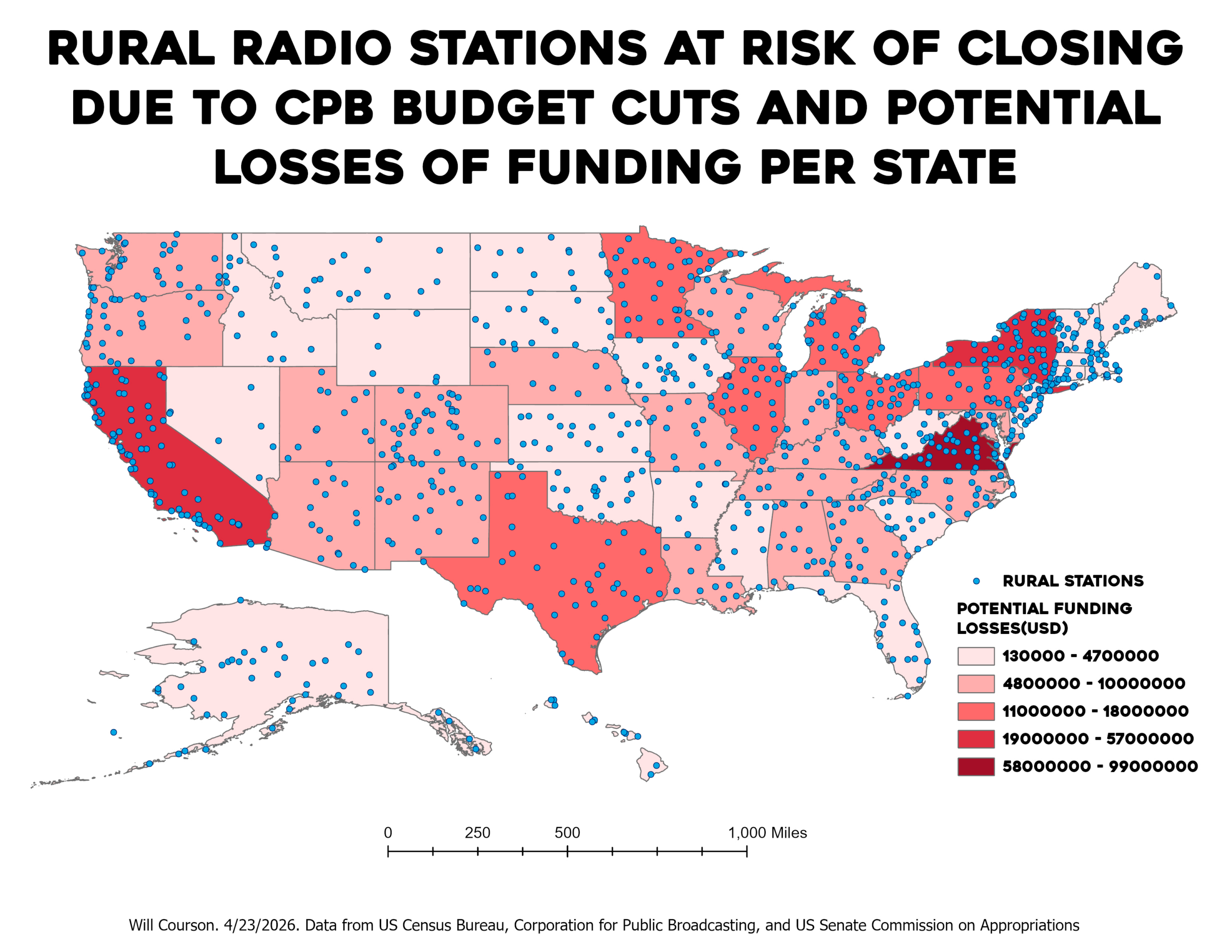
On May 1, 2025, the White House released an executive order calling for an end to the federal funding reserved for the National Public Radio (NPR) and the Public Broadcasting Service (PBS) through the Corporation for Public Broadcasting (CPB). The CPB is the non-profit founded by Congress to allocate funds for NPR and PBS. Its funding primarily supported local, non-commercial TV and radio stations in rural areas. The executive order expressed that public broadcasting should only provide unbiased and non-partisan news coverage, but the current media landscape has evolved since the founding of CPB in 1967 and is now “filled with abundant, diverse, and innovative news options.” President Trump expressed in the executive order that “the CPB’s governing statute reflects principles of impartiality” within its news coverage.
The White House’s decision to cease federal funding resulted in President Trump signing a bill into law on July 24th, 2025, to cancel $9 billion of funding intended to be allocated towards public broadcasting and foreign aid, $1.1 billion of which was reserved for the CPB. NPR and PBS receive taxpayer funds through the Corporation for Public Broadcasting, and while the funding they receive from CPB is not their sole financial provider, PBS has cut over a fifth of its budget in an attempt to mitigate the effects of Congress’s decision to slash its funding.
Larger news stations do not have to rely heavily on one stream of revenue or donor, but smaller stations in rural areas do not share the same luxury. Local stations have had to resort to layoffs, hiring freezes, and pauses in maintenance for emergency alert systems to stay afloat, which have the potential to increase response time during emergencies, particularly in remote areas without cell coverage. Local and national programming will have to decrease in these rural areas, resulting in the loss of availability of educational programs.
PBS Kids, whose funding goes towards early educational programs like Sesame Street, has felt the financial strain as the breadth of its ability to create multidisciplinary approaches to children’s education has been minimized. Although the PBS Kids’ programs are trying their best to endure through these budget cuts, the financial impact will restrict their ability to create new educational curricula meant to be accessible to all children. Proponents of the rescinding of federal funding to PBS and NPR maintain that the availability of educational resources in schools is sufficient to compensate for the potential removal of PBS Kids television programs. However, proponents of the rescinding of public broadcasting funding failed to consider how children in rural areas would be impacted.
Educational TV programs bridge the gap in educational resources for children in rural areas that lack access or financial resources. Where educational programs are sparse, cartoons and programs like Sesame Street, Daniel Tiger’s Neighborhood, and the Odd Squad allow children in areas with limited educational resources outside of school to develop social, emotional, and educational skills.
In the instance that children in rural areas lose access to educational programs through television and radio, there are alternative options on streaming services. Although some early-education programs are hidden behind a paywall, standout educator Ms. Rachel is making an impact by providing free, research-based videos to stimulate development for children across a broad range of topics.
Despite the focus of her content being the educational development of children through playful nursery rhymes and interactive techniques, Ms. Rachel has received significant controversy for her advocacy for the children in Gaza. Some family homes reportedly elected to stop streaming her show in protest. Her advocacy resulted in an overwhelming amount of criticism that accused her of being antisemitic for her sentiments on the children in Gaza rather than the children in Israel. Many also claimed that her platform was no place for political commentary.
Free, early education programs are being imperiled while adversaries of Ms. Rachel are vying to remove her channel from streaming in homes. This tension on children’s programming is leaving children in rural areas without exposure to different forms of early education programs. In the face of criticism, Ms. Rachel asserted that she advocates for all children suffering because of the conflict. Nevertheless, Ms. Rachel did not shy away from her criticisms of being “too political.” She released a public statement on social media affirming that she was political. Ms. Rachel upheld, “I am political. It’s political to believe that children are worthy of love and care, and that every child is equal, and that our care shouldn’t stop at what we look like, our family, at our religion, at a border.”
Ms. Rachel is giving parents a resource to stimulate the early development of their children amidst federal budget cuts to public broadcasting and the imminent risk of accessibility to educational resources for children in rural areas, irrespective of where they live or how much they can pay to educate their children. Budget cuts in public broadcasting are bringing about unprecedented change to local stations in rural areas; they are trying their best to make adjustments where they can to continue delivering news through television and radio.