By: Dillon Causby
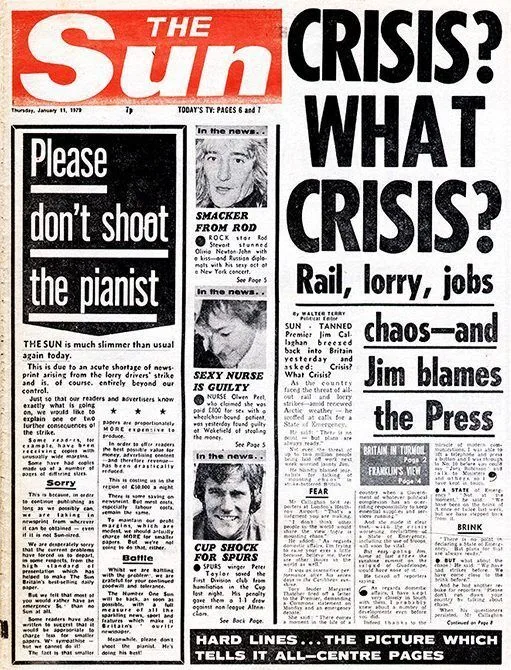
In contemporary political discourse, the term “crisis” is inescapable. As one crisis ends, another seems to take its place, each time giving policymakers new headaches, journalists new headlines, and the general public new anxieties. While the latter half of the 20th Century was characterized (at least for the so-called “Western World”) by stability, the 21st Century has been characterized by crisis.
However, the term crisis is not well defined. There are no empirical qualifications that make a situation a crisis, and many events that could have been described as a crisis have not been. In reality, crisis is an incredibly subjective term, and the decision to label a situation as a crisis can have significant political impacts in of itself.
The term crisis originated from the Greek verb κρίνω (krino), meaning to separate, decide, or judge, and was originally used in the fields of law, theology, and medicine to describe a choice between stark alternatives. According to Reinhart Kosseleck, the preeminent scholar on the conceptual history of crisis, the term has always had two distinct dimensions. The first dimension is objective: the description of a disruptive event. However, crisis also has a second, more subjective dimension, which is the assumption of a previous state of health, justice, or normalcy that is either restored or abolished.
Koselleck’s description of crisis reveals the positive and normative nature of the term. Any economic, political, or social calamity that is framed as a crisis is usually objectively dangerous or disruptive. However, this neutral description cannot be separated from the term’s subjective elements. David Runciman, a professor of political theory at the University of Cambridge, identified three subjective difficulties with the term. The first difficulty is definitional. Historically, crisis has been used to describe a situation that combines “fundamental threat with fundamental choice.” However, the question of which threats and choices are fundamental is largely one of ideology.
For example, while the European “Refugee Crisis” of 2015-16 was objectively disruptive to the established order, it was only for the far-right that the crisis was fundamental in terms of both threat and choice. For them, the “Refugee Crisis” represented a fundamental threat to the idea of ethnically homogenous nation-states, and presented a choice between the previously existing “natural order” and a new multicultural Europe which they viewed as destructive. Other political groups–such as social democrats or greens–were not forced to consider immigration as a fundamental threat and choice,since nativism is not core to their ideologies.
The second difficulty with the term is what Runciman calls “experiential,” which relates to the time frame of a crisis. A crisis feels different depending on who is experiencing it. For economic and political elites, the “2008 Financial Crisis” was, by and large, over by 2009. However, for those who lost their homes, jobs, and savings as a result of the crisis, the time period was much longer. Runciman’s final difficulty is what he calls “perspectival.” This relates to the differing experiences of a crisis, but includes the perspectives of those who have not experienced the effects of the crisis at all. The scale, time frame, and importance of a crisis looks different for someone who is experiencing it than for someone who is removed from it.
This last difficulty could help explain why so many contemporary crises are not given any attention by the media or political elites. Today, many Americans are struggling to afford food, housing, and other necessities. While this issue has reached the point where it could be fairly classified as an “affordability crisis,” it is a situation that writers and subscribers of major newspapers are largely removed from. Therefore, it does not get much attention compared to other issues.
The designation of a situation as a crisis is not an objective process. However, once this label is attached, it can have significant political effects. A “crisis” creates a sense of intensity and urgency that makes previously unacceptable behaviors permissible. The terrorist attacks of September 11th, which was in its aftermath framed as a crisis of security, created a political environment that permitted severe violations of civil liberties through the PATRIOT Act.
This phenomenon can also be seen in elections. In his 2024 book on the normalization of the radical right, Vicente Valentim explains how in Western Europe, the “Refugee Crisis” weakened social norms that discouraged voting for far-right parties. For both political elites and the average voter, the frenzy generated by a crisis permits the violation of norms. This can make a crisis an opportunity as well as a risk.
The term crisis is omnipresent in contemporary politics. Certainly, any event that is labeled as a “crisis” should be taken seriously. However, political scientists should move away from treating the term as just a neutral descriptor. Crisis, just like any other term in politics, is subjective and ideological. It is a term that is constantly being redefined, and it possesses a great deal of power. Not every disruptive situation has to be described as existential, and for any future situation that is characterized as a “crisis”, political scientists should question where this language is coming from, who stands to be affected, and why they should frame it in such a way.