By: John Monnin and Milan Yadav
The Arctic region has developed into an essential strategic framework that connects environmental patterns with resource management and international power dynamics. The disappearing sea ice reveals new opportunities for accessing hydrocarbon and mineral resources and data access and shipping optimization, and legal framework control. Russia and China use their separate yet matching approaches to create governance through their military power and financial backing. The Western world must decide which set of rules and institutions will shape High North actions because the United States leads this critical challenge.
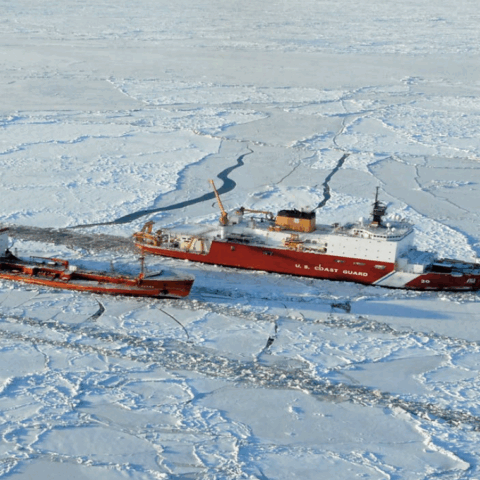
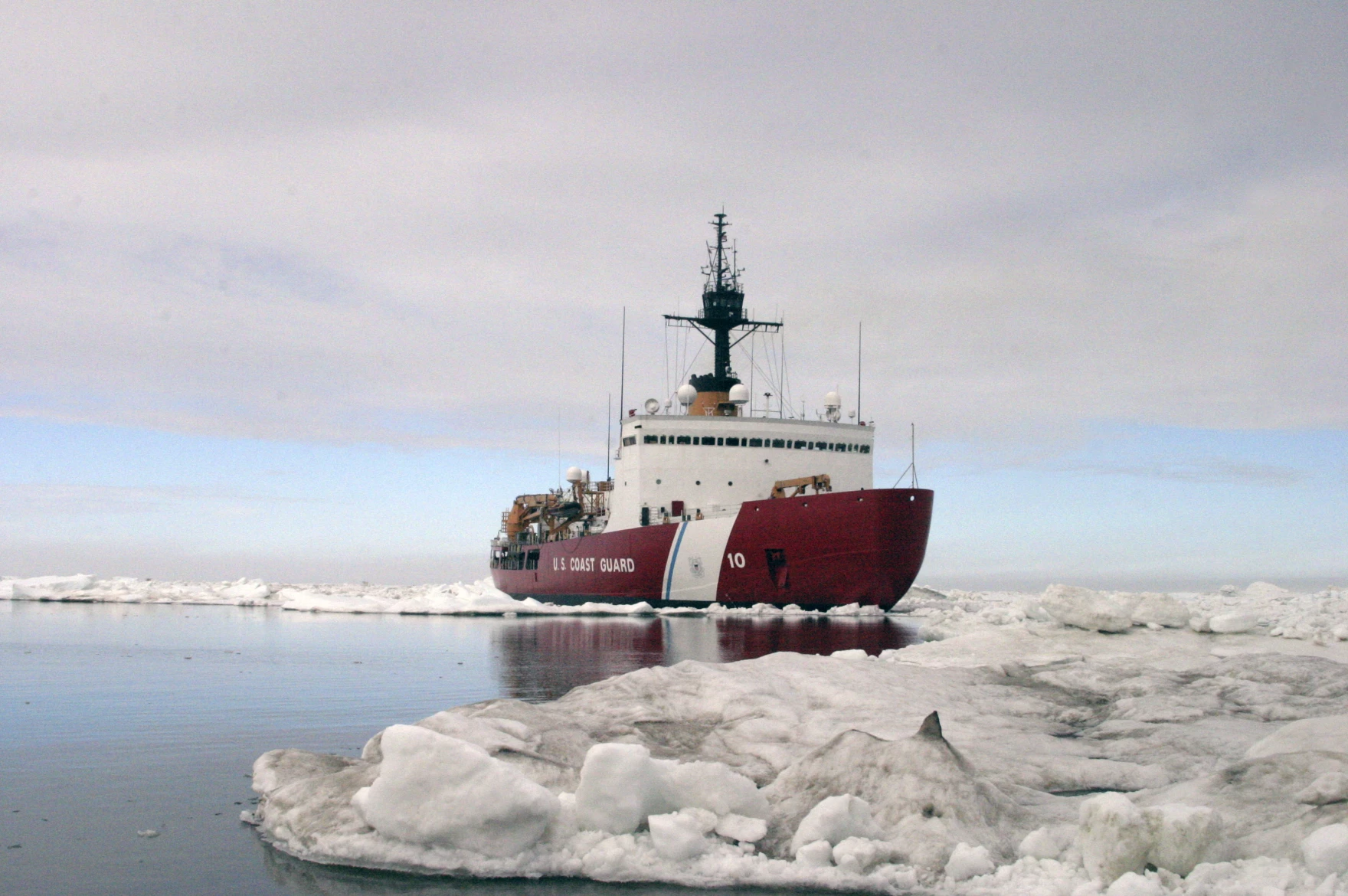
The Russian government has made complete control of its Arctic territory its fundamental strategic objective. Russia maintains the world’s largest cold-weather fleet while it modernizes Arctic air facilities and ports and treats the Northern Sea Route as domestic waters. The Russian government executes its Arctic strategy through two approaches, which combine physical infrastructure development with legal frameworks to enforce pilotage rules and payment systems, and monitoring requirements for NSR operations. The icebreaker fleet serves as a security escort service but also enables the creation of operational rules through safety and environmental protection measures, which support air defense operations and maritime domain awareness in areas outside NATO’s established boundaries.
China uses its Arctic strategy to develop economic growth and knowledge-based initiatives. The Chinese government supports research centers and polar-capable vessels and satellites, dual-purpose infrastructure construction, and promotes its “Polar Silk Road” initiative, which connects Arctic shipping routes to Eurasian supply networks. China expands its influence by creating strategic alliances and sensor standards and financial support, and scientific partnerships, which enable it to establish its technology and operational frameworks in emerging Arctic business networks. Russia controls the physical path of the Northern Sea Route, but China works to create vital connections through financial backing and data management systems, and logistics networks.
The United States must deal with three essential effects that result from these developments. The reduction of travel time between locations becomes feasible through Arctic shipping routes. The organization that controls pilotage operations and emergency response systems, and insurance standards will establish the speed at which international trade occurs. The fight for information dominance has emerged as the primary strategic priority. The control of bathymetric data and seabed sensor information and AIS transmission, and satellite operations enables market dominance and crisis management capabilities. The strategic value of legitimacy functions as a crucial element in this competition.
A successful U.S. strategy depends on permanent Arctic presence through icebreaker operations and dependable communication systems and year-round search and rescue services, and spill response capabilities based in Alaska. The United States should create green shipping routes and black-carbon emission standards and open data systems while using its position to enhance maritime law compliance through treaty-based practices. The United States should develop strong alliances with its allies through NATO expansion and U.S.-Canada operational coordination to establish a single command structure that spans from the Bering Strait to the North Atlantic.
The United States should treat Arctic LNG and critical minerals and undersea cables as essential strategic resources while creating economic frameworks that defend environmental standards to stop adversaries from taking control. The United States should create green shipping routes and black-carbon emission standards, open data systems, and enhance maritime law compliance through treaty-based practices. The US should also develop strong alliances with its allies through NATO expansion and U.S.-Canada operational coordination to establish a single command structure that spans from the Bering Strait to the North Atlantic, as well as treat Arctic LNG and critical minerals and undersea cables as essential strategic resources while creating economic frameworks that defend environmental standards to stop adversaries from taking control.