By: Kathryn Rozboril
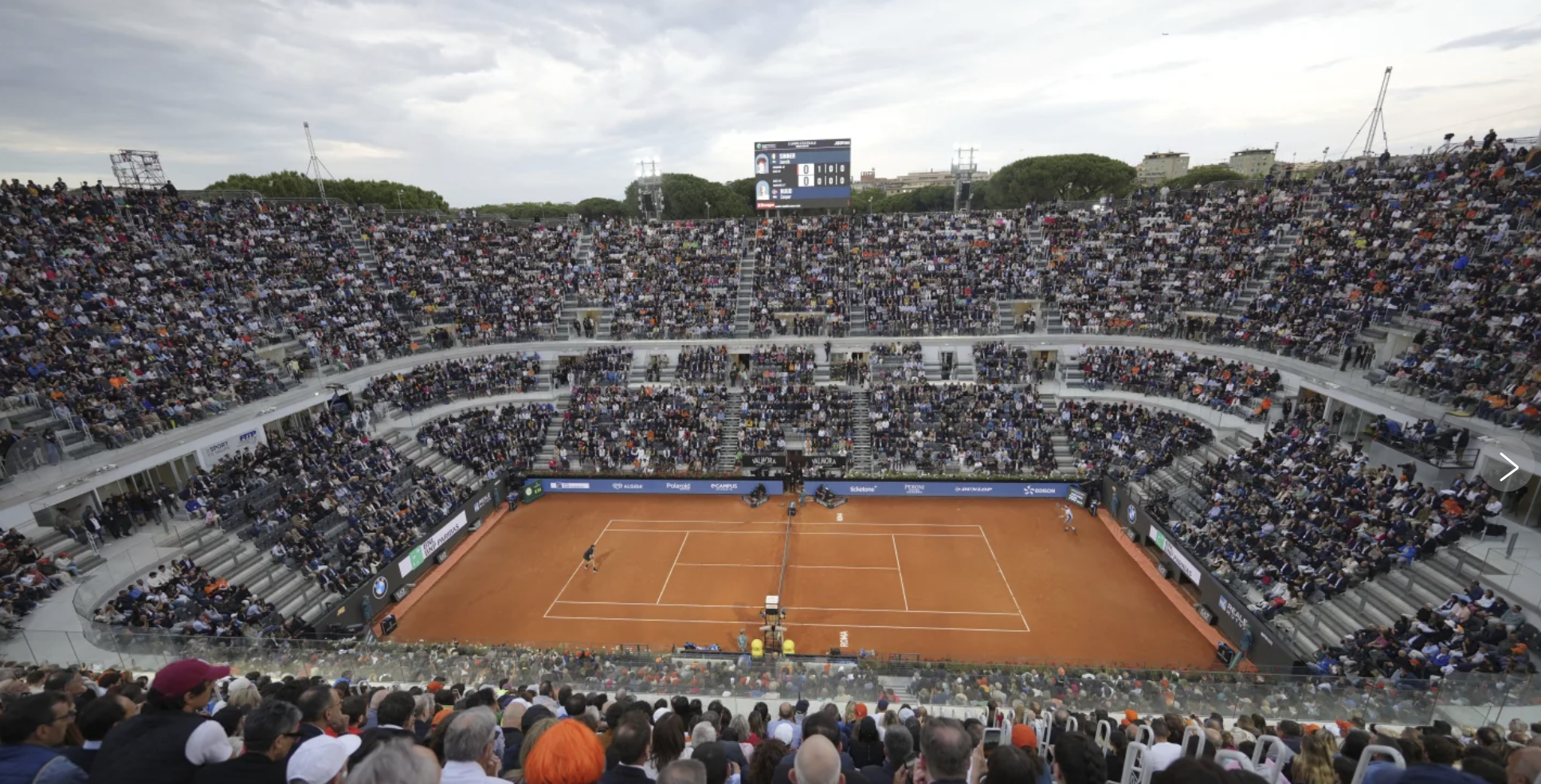
“Game, set, match!” Playing tennis professionally is no easy task, yet internationally it is one of the most popular sports in the world, with around 3,000 ranked players participating in the Association of Tennis Professionals (ATP) and Women’s Tennis Association (WTA) tours. Additionally, tennis reaches a fan base of over 1 billion people, dispersed across many countries in the world. Players compete in 60 tournaments scattered across 29 countries, individually or in teams of two. Furthermore, tennis players represent their countries and are often supported by royalty, celebrities, and fans from their home country. Top players like Novak Djokovic, Serena Williams, Carlos Alcaraz, and Naomi Osaka often face both international acclaim and scrutiny that reflects not only on them but their country as well.
Because tennis players compete under their flag, international politics often play a heavy hand in tennis. For example, after the Russian invasion of Ukraine, Russian tennis professionals like Andrey Rublev and Daniil Medvedev were banned from many pro tournaments. Though these players bear no responsibility for the actions committed by their home countries, they still suffer the consequences of international conflicts. However, the relationship between tennis and politics is a two-way street. Player affiliation with their countries can foster cooperation between nations, promote national pride, and bring in millions of dollars annually through sponsorships, tournaments, and tourism.
Tournaments on Tour
Tennis tournaments hold significance for several reasons. First, tournaments generate massive amounts of revenue. One example of this is the BNP Paribas Open, a Masters 1000 tournament set in Indian Wells, California which generated roughly $850 million in revenue in 2024 from the tournament itself and the resulting increase in local employment and spending. Furthermore, research suggests that the level of development of national tennis federations is a significant indicator of economic development. Second, tournaments motivate tourism which has a positive impact on both the economy and diplomacy as large sport events generate positive press from fans. Last, because tournaments host tennis players from all over the world, they are an important factor in international sports diplomacy — connecting players of different countries, promoting goodwill between competing nations, and boosting host nations’ soft power.
The four largest tournaments on the ATP and WTA tour each year are referred to as Grand Slams and are hosted in Australia, France, England, and the United States. Victories in a Slam are weighted more heavily than any other tournament, and the prize money is the largest of any other tournament. For context, tennis players are ranked according to the amount of points they accumulate across a season, which they get from playing tournaments. Larger tournaments are worth more points, with victories at Grand Slams affording winners up to 2000 points, while smaller tournaments may only afford players 250-500 points. Politically, however, Slams hold even more importance. Though the tour consists of around 60 tournaments each year, few garner the international attention that Grand Slam tournaments do. These four tournaments collectively generate about $1.5 billion dollars each year, and they attracted a combined viewership of 2 billion people in 2024. The Slams are significant because of their far-reaching impact in the tennis world, economy, and international relations.
A Fifth Slam
Though the Grand Slam schedule has remained the same over the last century, some fans have called for the introduction of a fifth Grand Slam. A fifth Slam would not only significantly shift the current tournament schedule, it would have cascading effects on the host country. The economic impact, rise in tennis interest, and diplomatic implications of creating another large sports event would transform international relations. One interested party has already announced their interest in creating a fifth Slam. The Italian Tennis and Padel Federation launched a bid of $550 million to acquire the Madrid Open in Spain and to expand the Italian Open to a two-week-long tournament, in an attempt to transition the Italian Open from a Masters 1000 tournament to a Grand Slam. With a current boom in tennis interest in Italy due to the rise of tennis star Jannik Sinner, Italy has been pushing more than ever for the creation of a fifth Slam.
However, Italy is not the only voice in this competition. Currently, western nations have a chokehold on tennis, with 53% of ATP tournaments being held in Europe and another 28% held in North America. This has given European tennis players a substantive advantage and serves as an indication of stronger tennis infrastructure and connections in European nations. However, shifting an expansion of the tennis schedule eastward by transitioning a current Masters tournament like the Shanghai Masters into a Slam could change this dynamic.
Furthermore, this may actually work better with the ATP and WTA schedule. With Slams currently starting in late January, May, July, and August, the summer schedule is already packed. The Italian Open, which occurs in May right before Roland Garros, would further clutter an already condensed, stressful schedule. However, the Shanghai Masters begins in October and presents an opportunity to hold onto attention from the tennis community that may have wavered after the summer Slams finish. Still, if a new Slam is going to be created, international debate over where and when to host it will rage between competing nations. Ultimately, the result of this debate will either preserve the international political status quo or create a new dynamic between Eastern and Western countries, prioritizing the further globalization of tennis.
However, despite the potential benefits resulting from the creation of a new Slam, the International Tennis Federation (ITF) is firmly against expansion of the current system. Several complications arise from debate over a new Slam. Though many smaller tournaments have been created, the large tournaments have remained the same for a century because of the high start-up costs associated with creating a tournament that can host around 300 players and multiple rounds of playing. Additionally, many countries with large tennis tournaments and high interest do not believe the benefits of a fifth slam could outweigh the costs, and countries without many tournaments lack the interest or money to lobby for a new Slam. Furthermore, the ATP and WTA schedules are packed, and complaints over the short turnaround time between tournaments and the lack of off season have risen from players at the highest level. Creating a new Slam would cause major shifts to the schedule, which would break many current tournaments’ agreements with the ITF, and further stress the top 100 players.
Though many fans may want a new Slam, implementing this dream would cost more than just construction. International feuding over the location and timing of this slam as well as rising tensions between countries in Europe, Asia, and America indicate that rather than holding together international relations, the creation of a new slam might just break them.