By: Dillon Causby
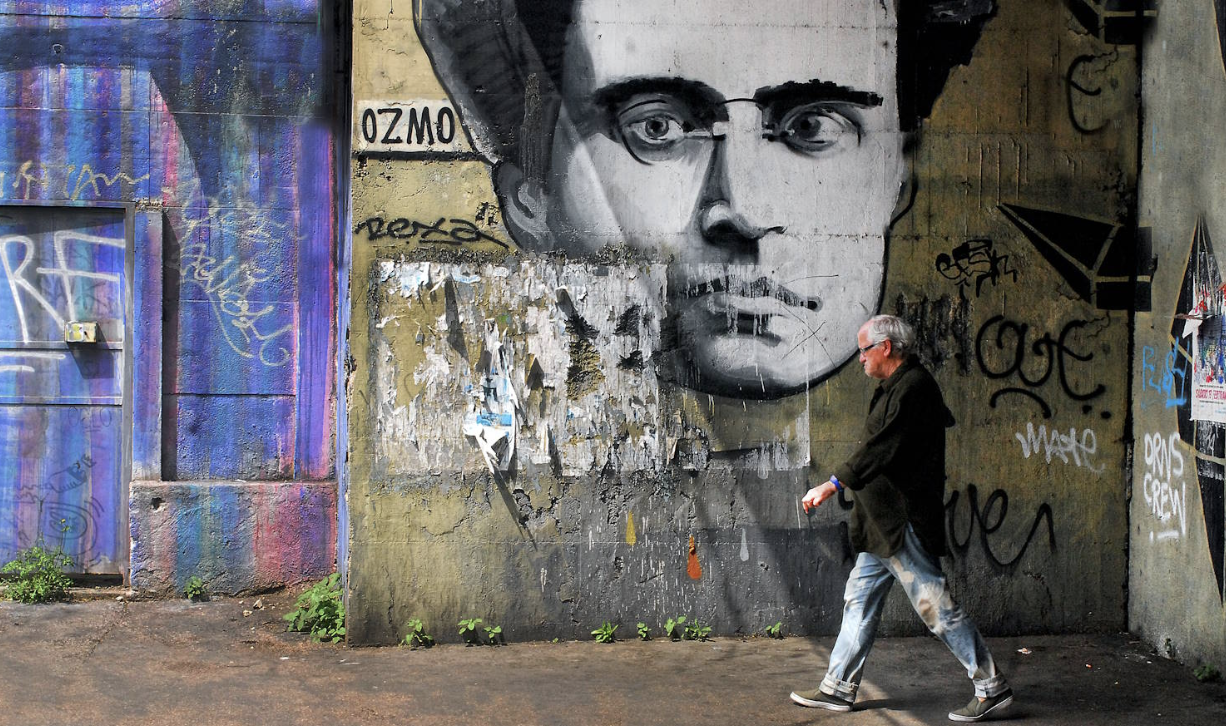
In his 1994 book discussing the left-right political distinction, the Italian political philosopher Noberto Bobbio questioned why the ideas of political theorists can so easily be embraced by those on both ends of the political spectrum (Bobbio 1994). How, for example, could the works of Nietzsche appeal to both the Fascists of the 1930s and the New Left of the 1960s? This flexibility of political interpretation is a common phenomenon, and today it can be seen with the far-right, who, over the past half-century, have drawn inspiration from an unexpected figure: The Italian Marxist Antonio Gramsci.
In the 21st century, far-right parties and actors have become incredibly skilled at articulating their issue positions, and surprisingly, the ideas of Antonio Gramsci have been critical in this process. Although ideologically opposed to the far-right in nearly every respect, Gramsci was one of the first to recognize and articulate the relationship between culture and power. After co-founding the Communist Party of Italy in 1921, Gramsci was arrested and imprisoned by Mussolini’s Fascist government in 1926 in an effort to stop his political activism.
However, the Fascist regime did not succeed in this goal. From the confinement of prison, Gramsci developed a theory of politics that has served as a guide for political actors across the left-right spectrum. In his nearly 3,000 pages-worth of writings, which were later compiled as The Prison Notebooks, Gramsci explained that culture and collective belief play a critical role in the accumulation of power. From his view, understanding this is essential for any group that wishes to establish its dominance over others.
Through these notebooks, Gramsci’s main objective was to explain why the socialist movements of the 1920s failed and why the far-right reactions to them succeeded. In an effort to answer this question, he focused on the power of “common sense,” which is defined by the Dutch political scientist Cas Mudde as “…the consciousness of the people,” or apolitically-framed ideas and customs that are actually inherently political.
Gramsci asserted that political and economic elites do not maintain their power primarily through coercion, but rather through consent. In creating this consent, elites use the institutions of civil society, including universities, the mass media, and religious organizations to create a culture that frames the existing order as natural and positive. Thus, elites are not primarily protected by their coercive power, but instead through cultural institutions that frame their point of view as “common sense.” In Gramsci’s view, any group that wants to achieve “political hegemony,” or the control of political institutions, must first achieve “cultural hegemony,” which is the dominance of ideas in civil society. Simply put, culture always lies upstream of politics.
In the decades following the Second World War, this strategy of politics gained traction in several important academic and intellectual spheres. However, the most unexpected disciples of Antonio Gramsci can be found on the far-right. After 1945, Fascism and Nazism were viewed as the ultimate evil. Therefore, many of those who subscribed to these beliefs developed a “right-wing Gramscianism,” and engaged in what the far-right French theorist Guillame Faye called “metapolitics,” or the slow dissemination of far-right ideas into civil society. The most sophisticated of these “revisionist” groups was the Nouvelle Droite (New Right), a French far-right movement which ditched the mass politics of the 1930s in favor of an “academic” strategy.
With think tanks such as The Research and Study Group for European Civilization, the Nouvelle Droite advanced ideas such as “ethnopluralism,” the belief that all cultures and ethnicities are equal, but should be segregated. However, for Gramscians, the struggle for cultural dominance is a long and protracted one in which their true beliefs are slowly accepted by society. Therefore, concepts like ethnopluralism are not necessarily the “end-goal,” but rather a stepping stone in an ideological battle whose ultimate endpoint is the acceptance of racial and ethnic hierarchies as “common sense.”
Clearly, the strategy of metapolitics did not stop with the Nouvelle Droite. It seems that the far-right in Western Democracies have a bigger appreciation for the power of common sense than the left. This appreciation was never better on display than three days after Donald Trump’s second Presidential Inauguration, when he declared in a speech to the World Economic Forum that “What the world has witnessed in the past seventy-two hours is nothing less than a revolution of common sense.” In his Prison Notebooks, Antonio Gramsci exposed civil society as the arena in which political struggle takes place, where old regimes die and new ones fight to take their place. In the century following his death, actors on both the left and right have subscribed to Gramsci’s strategy of politics. If any one lesson can be taken from Gramsci’s writings, it is this: to question common sense.