By: Jackson Bost
The Red Cross and Volunteers in Katrina
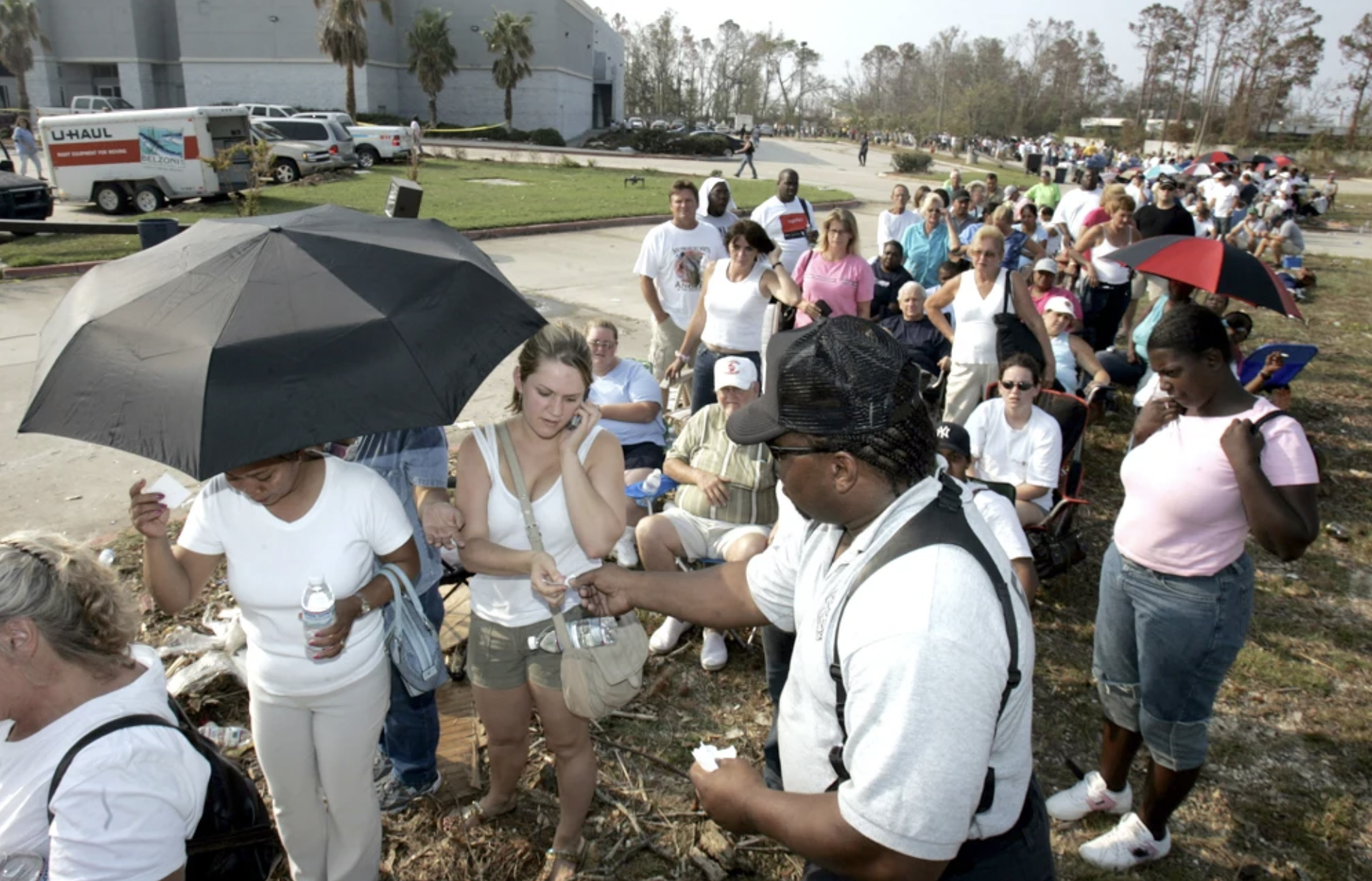
20 years ago, Louisiana and Mississippi were struck by Hurricane Katrina, one of the most expensive and deadliest hurricanes in U.S. history. The states faced the modern equivalent of $200 billion in damages and nearly 1400 deaths. The ensuing catastrophe in disaster management drew the eyes of the nation, many of whom came to lend their time to those most in need. These volunteers flooded the Gulf Coast, looking to an often disoriented, unprepared Red Cross to show them where their service was needed. The organization has had a storied history of providing lifesaving care to those affected by war and natural disasters, but its management of volunteers in the wake of Katrina may have turned a disaster into a tragedy.
The first step for Red Cross volunteers was to check in, go through a rudimentary training program, and select a service area where they wished to receive further training. The sheer size of the humanitarian response, though, proved to be a problem itself. For the more than 200,000 volunteers that arrived, many felt their skillset was unaligned with the task they had been assigned. Others were rejected or put on waitlists. Staff were not particularly helpful in this area; a search-and-rescue organization had to continually press a staff member for an assignment after he had told them search-and-rescue was not in the Red Cross’s purview. When volunteers did receive an appropriate job, policy barriers prevented them from maximizing their efforts, especially in the context of Katrina. In one case, healthcare volunteers could not administer in-depth medical assistance to evacuees because Red Cross volunteers were limited to first aid. The severity of conditions and the Red Cross’s lack of preparation overwhelmed volunteers and worsened service for those in need.
In the months and years that followed, this mismanagement of volunteers contributed to a flurry of critiques on the Red Cross’s response, including a bill to amend the Red Cross’s internal governance and accountability. Today, it serves as a key case study on the importance of volunteers and their treatment for the work of NGOs.
NGOs and Volunteerism’s Decline
For over 100 years, NGOs have been indispensable in providing humanitarian assistance, aid, and sustainable development for those in need. One of the key cogs that makes this altruistic machine move has been volunteers; they make up a ⅙ of the nonprofit workforce, work a combined five billion hours, and generate $167.2 billion in value with their labor. Today, that cog is beginning to wear. In recent years, the rate of formal volunteering in the United States has fallen from 30% to 23%, a problem that was only exacerbated by the COVID-19 pandemic. 46.8% of nonprofit CEOs recognize volunteer recruitment as a critical issue facing their organization.
The trouble in keeping volunteers boils down to their mistreatment, which comes both through the culture surrounding volunteers and the physical conditions they face when volunteering. With the former, there is a common issue of NGO staff looking down upon, complaining about, and disregarding the contributions of volunteers in their organization. When discussing members of a team, staff frame volunteers as problematic and time-consuming. This language has been picked up by volunteers as well, notably in how they refer to themselves as “just” volunteers rather than the crucial actors that they are. These attitudes create a poor working culture that is not conducive to returning volunteers and fails to provide the energy to deliver effectively on their tasks. In the post-Katrina report, the Red Cross acknowledged that it failed to make strong and enduring partnerships, admitting a “we know better” culture had stifled the response. The combination of burnout, lack of a voice to influence decisions, and ambiguity within their own role drives away volunteers. For some volunteers, this meant sleeping in a field because the shelter was too inhospitable, while others were stranded in managerial positions that would normally be filled by experienced paid staff. These traits were seen in the Katrina response, where volunteers faced overwhelming numbers of evacuees in dire poverty and medical crises, had restrictions on the ways they could officially serve, and lacked a clear purpose.
The Impact on NGOs
Should the mistreatment and hemorrhaging of volunteers continue, NGOs will face a number of stark consequences. The most obvious of these is financial. The fewer volunteers there are, NGOs will be forced to hire more paid positions and absorb more costs in providing their services. Unless monetary donations begin to spike, this will pose a threat to the NGO’s ability to serve at all, since only ½ of nonprofits maintain auxiliary funds needed to run their programs.
If NGOs fail to attract volunteers, especially from the communities they serve, they will lose out on an important resource only locals may provide: context. These types of volunteers serve as middlemen that can identify hidden needs, update NGOs on the impact of their programs, and raise awareness on NGO resources for the community. Should NGOs have to swap to the same paid staffers for every project, they will be missing that local insight and leave needs unmet.
Finally, volunteers have a deep personal impact on those that they serve. Volunteers are often flexible and open to needs when they arise, allowing them to form connections with beneficiaries that go beyond the scope of their volunteering. This altruistic spirit is generally among all volunteers, but it works best when they can do this with a limited number of aid recipients. Should volunteers continue to decline, the ones that remain will quickly become overworked, leaving beneficiaries with paid workers who cannot provide the same empathy.
Moving forward, NGOs will need to reconsider the treatment of their volunteers if they want to continue delivering their life-saving services. The financial cliff and the decline in service quality that the continued hemorrhaging of volunteers would create are too great a risk to ignore. NGOs must look for ways to make volunteers feel more appreciated and create clear tasks for them to serve in. If the issue is not addressed now, the future will have fewer knowledgeable, returning volunteers ready to recruit the next generation, ultimately undermining NGOs’ ability to address the next disaster.