By: Eden Levitt-Horne
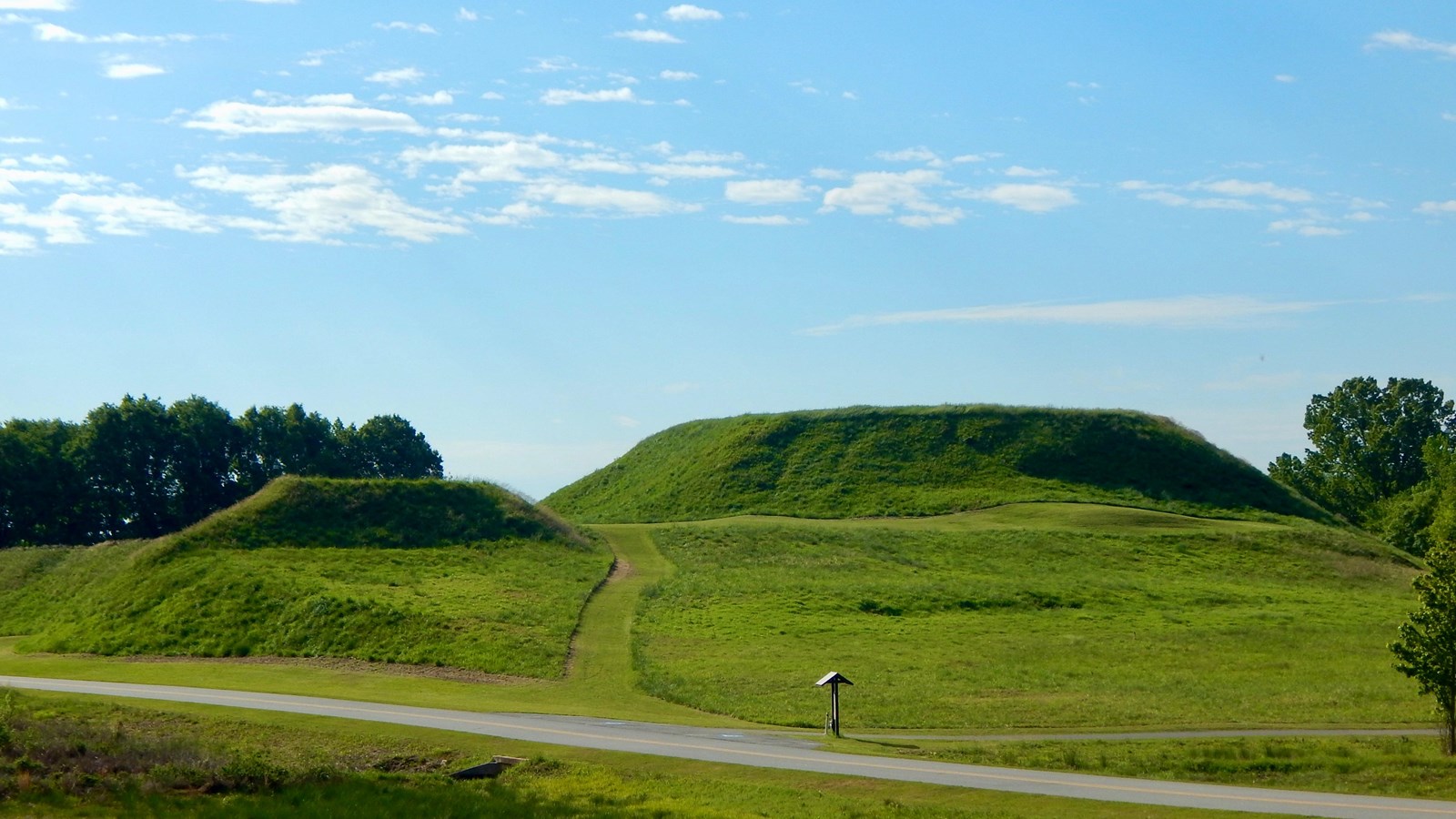
An emerging initiative in Middle Georgia is poised to redefine the landscape of American public land management, moving toward a future of genuine partnership between the U.S. government and Native American tribes. The bipartisan push to designate Georgia’s Ocmulgee Mounds as a National Park and Preserve is not merely a proposal to protect a collection of ancient earthworks; it represents a profound policy experiment in historical recognition, tribal sovereignty, and economic revitalization. Should it succeed, this project could serve as a definitive blueprint for a new era of federal land stewardship.
History of the Site
The Ocmulgee Mounds area offers one of the most compelling examples of layered American history. It marks the ancestral home of the Muscogee (Creek) Nation, who, for millennia, inhabited the Ocmulgee River corridor, culminating in the construction of the monumental Mississippian-era mounds. This was disrupted by the Indian Removal Act of 1830 and the subsequent Trail of Tears, which forced the Muscogee Nation west to Oklahoma.
Overlaying its deep Indigenous history is the site’s Civil War legacy. The proposed park and preserve area includes sites associated with the Battle of Dunlap Hill, the Battle of Walnut Creek and other clashes during Union Army General William Sherman’s campaign. Furthermore, remnants of plantations and fortifications built with the labor of enslaved African Americans are present on the land. If passed, the park’s elevated status would provide a more visible platform to convey this interwoven history.
Co-Management and Reconciliation
The most groundbreaking element of the Ocmulgee Mounds National Park and Preserve proposal lies in its explicit provision for formal co-management with the Muscogee Nation, granting the tribe direct decision-making authority over the management of the land. The bill also authorizes the establishment of an advisory council, ensuring the Muscogee Nation’s voice is structurally integrated into long-term planning and decision making.
This is a radical departure from past federal practices, where the establishment of National Parks often relied on the erasure, subjugation, or forced removal of Indigenous peoples. David Hill, the Principal Chief of the Muscogee Nation, said, “The opportunity to make the historic Ocmulgee Mounds a national park is so important to us because we have been included, we have been shown the respect of collaboration, and because of that we can feel confident that the living history that will be told here is authentic and has the power to elevate Georgia forever.” This sentiment underscores how the proposal models a shift toward true partnership between the federal government and Tribal nations.
The implications of this new model of tribal co-management are national in scope. The Department of the Interior is increasingly moving toward co-stewardship and co-management agreements, often prompted by Tribal initiatives. Ocmulgee is on track to become one of the most prominent examples of a National Park and Preserve where the descendants of the land’s original stewards have a seat at the management table. Its success could provide a definitive blueprint for how the federal government can honor its trust responsibilities and rectify historical injustices by sharing authority over ancestral lands with sovereign Tribal nations, especially those who, like the Muscogee, were forcibly relocated.
Economic and Environmental Impact
The Ocmulgee proposal is also framed as a major economic stimulus for Middle Georgia. Advocates, including local Macon officials and regional business leaders, emphasize that elevating the site to National Park and Preserve status would generate significant economic benefits for the region. A comprehensive study on the initiative projected an estimated $206.7 million in annual economic activity. Further, it would produce an additional $76.5 million in annual labor income and $29.8 million in added tax revenue. Such an expansion is projected to support over 2,800 new jobs, which is an 18-fold increase over the current National Historical Park’s contribution.
Crucially, the legislation is structured to mitigate potential local concerns. The unique “Park and Preserve” model allows for two different management styles within a single unit: the Park section is generally reserved for strict protection of the mounds and cultural resources, while the expanded Preserve section, potentially covering tens of thousands of acres, would permit regulated recreational activities like hunting, fishing, and camping. Furthermore, the bill explicitly prohibits the use of eminent domain for land acquisition, ensuring that all expansion is voluntary through private land donations and public-private purchases, a provision that directly addresses common property rights concerns in rural areas. The initiative also supports the mission of nearby Robins Air Force Base by conserving undeveloped land in the river corridor, helping prevent encroaching development that could conflict with flight operations.
Legislative Momentum
The momentum behind the Ocmulgee Mounds proposal is propelled by a remarkably bipartisan coalition in Georgia. This widespread political support is rooted in the proposal’s ability to offer benefits across ideological lines. For Democrats and conservationists, the bill advances environmental protection, conservation of a major river corridor, and a pioneering model of tribal partnership and historical reconciliation. For Republicans and local interests, the legislation promises substantial economic benefits, job creation, respect for private property rights (via the eminent domain prohibition), and the expansion of hunting and fishing access (via the Preserve designation).
While the bill has faced procedural delays in Congress, its strong bipartisan backing and support from major stakeholders, including the Department of Defense, the Georgia Chamber of Commerce, and the Muscogee Nation, makes its eventual passage highly anticipated. The initiative marks a promising step toward cooperation between Tribal nations and the federal government in the shared stewardship of public lands.